

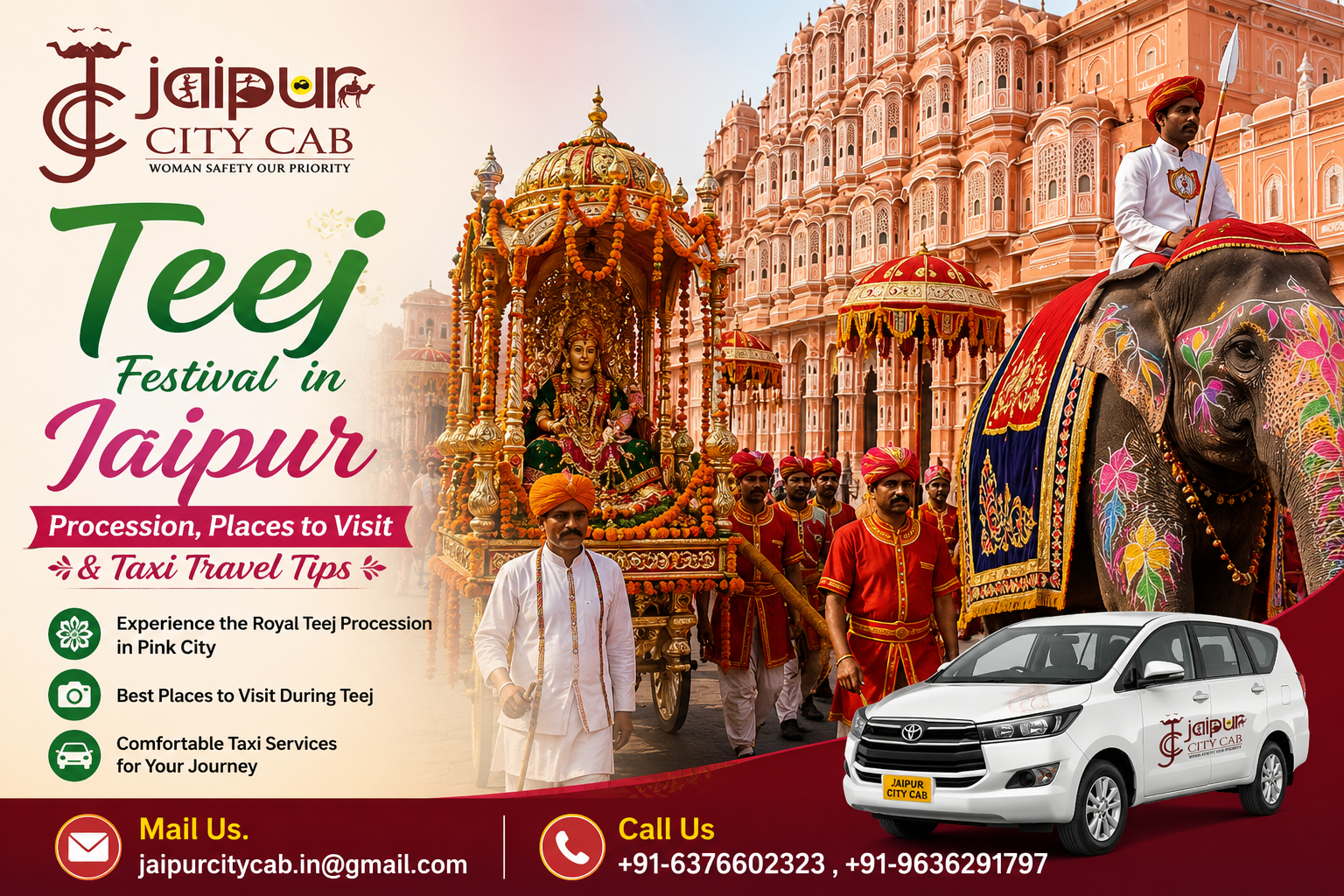
Teej Festival in Jaipur: Procession, Places to Visit & Taxi Travel Tips
Teej Festival in Jaipur is one of the most colorful, traditional and culturally important celebrations of Rajasthan. The festival transforms the Pink City into a lively destination filled with decorated streets, royal processions, folk music, traditional costumes, swings, sweets, mehndi, local shopping and festive energy. For tourists, Teej is an excellent time to experience Jaipur beyond its famous forts and palaces because the city presents its living traditions in a grand and memorable way.
Jaipur is already known for Amber Fort, Hawa Mahal, City Palace, Jantar Mantar, Jal Mahal, Nahargarh Fort and colorful bazaars. During Teej, these attractions become part of a wider cultural experience. The old city streets are decorated, local markets become crowded with festive shoppers, women wear colorful lehengas and sarees, and the royal Teej procession attracts visitors from India and abroad.
The main highlight for tourists is the traditional procession of Teej Mata, which usually passes through the historic streets of the old city. The procession may include a beautifully decorated palanquin, elephants, camels, horses, chariots, folk dancers, musicians, traditional guards and local performers. The exact route, timing and traffic arrangements may vary each year, so visitors should check current local updates before reaching the procession area.
This complete guide explains the meaning of Teej, why Jaipur is famous for the celebration, how to watch the procession, the best places to visit during the festival, food and shopping recommendations, photography advice and practical taxi travel tips. Tourists can use professional Jaipur taxi services for hotel pickup, festival sightseeing, local market visits and comfortable travel around the Pink City.
Travelers arriving by air can pre-book a reliable Jaipur airport taxi service for direct transfer to their hotel. Visitors who want to combine Teej celebrations with forts, palaces and city attractions can also choose a full-day Jaipur sightseeing taxi and Jaipur Taxi Fare for Sightseeing with a customized festival itinerary.
Table of Contents
- What is Teej Festival?
- Religious and Cultural Significance of Teej
- Why Jaipur is Famous for Teej Festival
- Teej Procession in Jaipur
- Understanding the Procession Route
- Best Places to Watch the Teej Procession
- Best Places to Visit During Teej in Jaipur
- One-Day Teej Festival Jaipur Itinerary
- Two-Day Teej Festival Jaipur Itinerary
- Teej Shopping Guide in Jaipur
- Food to Try During Teej Festival
- Photography Tips for Teej Procession
- Family Travel Tips During Teej
- Teej Guide for International Tourists
- Taxi Travel Tips During Teej Festival
- Why Choose Jaipur City Cab?
- Frequently Asked Questions
What is Teej Festival?
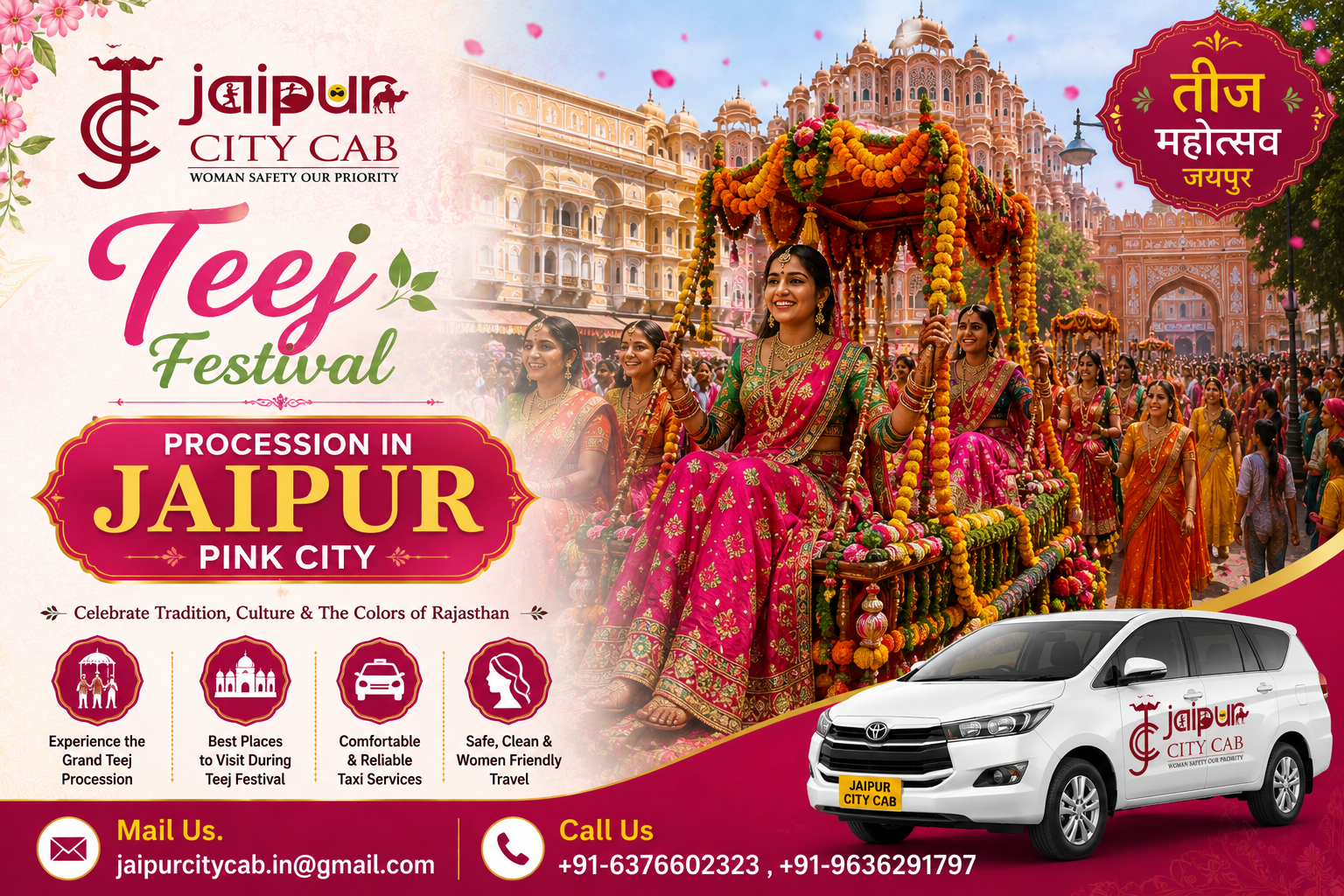
Teej is a traditional Hindu festival celebrated mainly by women in Rajasthan and several other parts of India. The festival is associated with the monsoon season, marital happiness, devotion, prosperity and the union of Goddess Parvati with Lord Shiva. Women often observe fasts, wear traditional clothes, apply mehndi, sing folk songs, visit temples and participate in cultural activities.
The festival is also connected with the arrival of rain after the intense summer. In Rajasthan, where the monsoon brings relief and greenery, Teej has a strong seasonal meaning. Swings are tied to trees, women gather in groups, traditional songs are sung and festive dishes are prepared at home.
In Jaipur, Teej is not limited to private religious observance. It becomes a public cultural celebration. The historic city hosts a traditional royal procession that allows visitors to see old customs, decorated animals, folk artists, musicians and ceremonial elements associated with Jaipur’s royal heritage.
The celebration is especially attractive to photographers, cultural travelers, families, history lovers and international tourists because it combines religion, art, costume, music and city heritage in one experience.
Religious and Cultural Significance of Teej
The religious meaning of Teej is traditionally linked to Goddess Parvati’s devotion to Lord Shiva. Women pray for the well-being of their families, marital happiness and prosperity. Married women often observe the festival for the long life and good health of their husbands, while unmarried women may pray for a suitable life partner.
The cultural importance of Teej goes beyond fasting and prayer. It creates a sense of community. Women gather together, wear bright green, red, yellow and pink clothes, decorate their hands with mehndi and enjoy folk songs. Green is often associated with the monsoon season and new life.
In Rajasthan, the festival is also connected with traditional crafts, clothing and food. Markets display lehengas, sarees, bangles, jewelry, lac items, decorative products and festive sweets. Local artists and performers become part of public celebrations, helping preserve the cultural identity of the region.
For tourists, understanding this meaning is important. Teej is not simply a parade or entertainment event. It is a living tradition with religious, emotional and social value. Visitors should watch respectfully, avoid blocking rituals and ask permission before taking close photographs of individuals.
Why Jaipur is Famous for Teej Festival
Jaipur is one of the best cities to experience Teej because of its royal history and well-preserved old city. The festival procession moves through areas surrounded by pink buildings, heritage gates, traditional markets and historic architecture. This creates a visual setting that is difficult to find elsewhere.
The royal connection makes Jaipur’s celebration special. The traditional idol or image of Teej Mata is carried in a ceremonial palanquin, accompanied by decorated animals, guards, musicians, dancers and performers. The combination of royal style and local participation gives the event a grand character.
The old city markets also contribute to the festive atmosphere. Johari Bazaar, Tripolia Bazaar, Bapu Bazaar, Kishanpole Bazaar and nearby streets become busy with shoppers. Stores display colorful textiles, jewelry, lac bangles, mehndi products, sweets and traditional gifts.
Jaipur is also convenient for travelers because it has an airport, railway station, hotels in all budget categories and excellent road connectivity. Tourists can easily combine the festival with local sightseeing and nearby Rajasthan tours.
- Royal Teej Mata procession
- Historic Pink City backdrop
- Traditional folk dance and music
- Decorated elephants, horses and camels
- Colorful clothing and jewelry
- Festive markets and local shopping
- Traditional sweets and Rajasthani food
- Excellent photography opportunities
- Easy connection with Jaipur sightseeing
Teej Procession in Jaipur
The Teej procession is the central attraction of the festival in Jaipur. It is generally organized in the old city and attracts large crowds. The procession often begins from a historic palace or ceremonial location and moves through selected market streets. Because arrangements can change, tourists should confirm the official route and timing from local authorities, hotel staff or verified tourism updates.
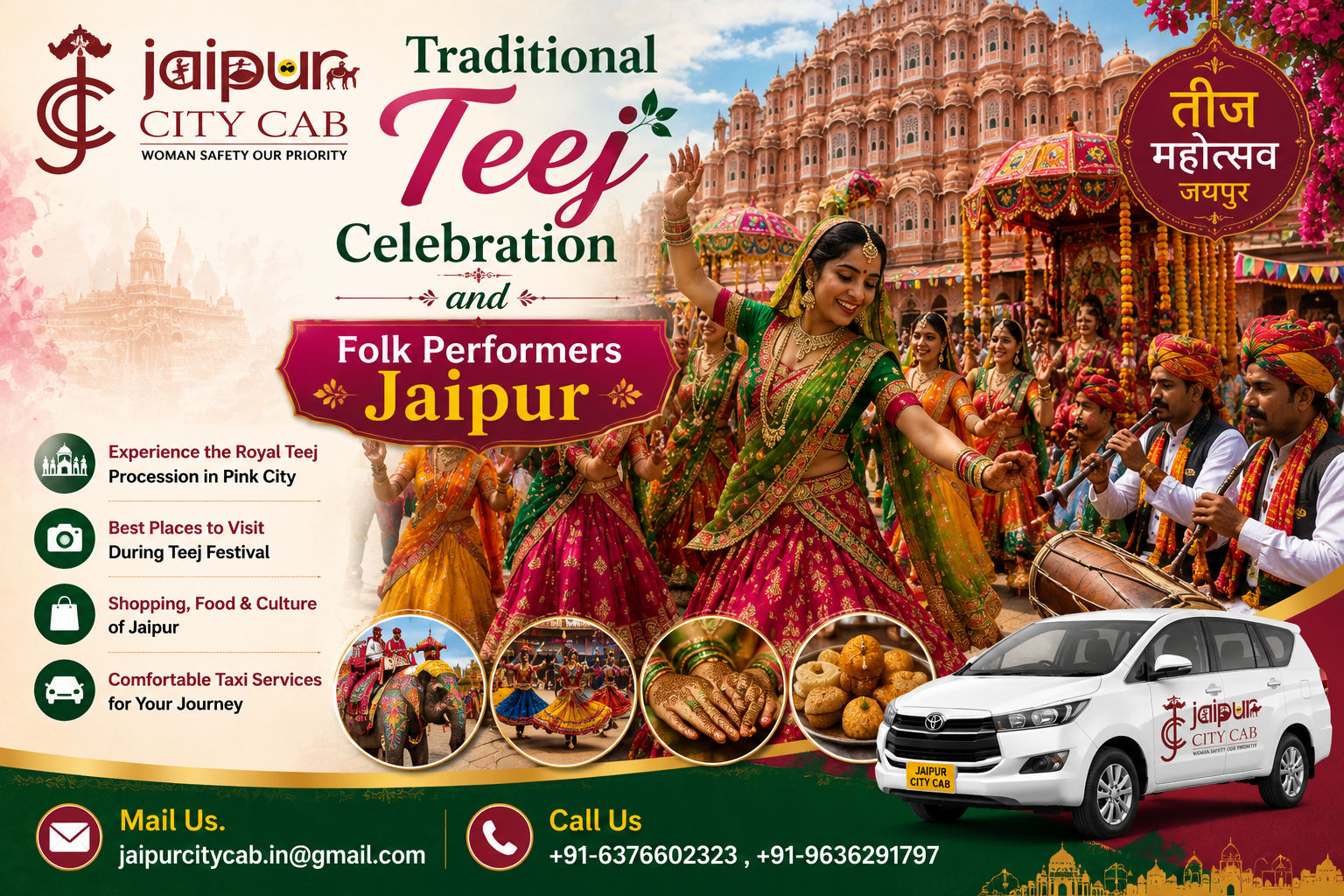
The procession presents a beautiful combination of devotion and royal tradition. Teej Mata is carried in a decorated palanquin while musicians and performers move with the procession. Folk dancers wear traditional costumes, drummers create a festive atmosphere and ceremonial guards add a royal appearance.
Decorated elephants, camels, horses and chariots may also be included. Their participation reflects Rajasthan’s historic royal processions. Visitors often stand along both sides of the road, on approved viewing points or near market balconies to watch the event.
Crowds can become dense near popular areas. Tourists should arrive early, carry minimal belongings, keep water with them and follow police instructions. Roads around the procession may be closed or diverted, so private taxis may have to drop visitors at a designated point outside the restricted area.
Main Attractions of the Teej Procession
- Decorated palanquin of Teej Mata
- Traditional royal guards
- Folk dancers in colorful dresses
- Rajasthani musicians and drummers
- Decorated elephants and camels
- Traditional horses and chariots
- Local cultural groups
- Historic market streets
- Festive lights and decorations
Understanding the Teej Procession Route
The procession traditionally passes through the old city of Jaipur. The old city has narrow roads, busy markets and heritage gates, which means normal traffic movement may be restricted. The exact starting point and route can change due to crowd management, weather conditions, security arrangements or restoration work.
Tourists should not depend on outdated route information. It is better to confirm the current procession route one day before the event. Your hotel reception, driver, local tourism office or traffic police updates can help.
A taxi is useful for reaching the nearest accessible drop point. However, the final part of the journey may need to be covered on foot. Wear comfortable footwear and avoid carrying large bags. Families with senior citizens should choose a safe viewing location away from the heaviest crowd.
Possible Old City Areas Connected with the Festival
- Tripolia Gate area
- Tripolia Bazaar
- Chhoti Chaupar
- Gangauri Bazaar
- Johari Bazaar surroundings
- Historic city gates and market roads
These areas are mentioned as general heritage zones associated with traditional Jaipur processions. Visitors must verify the final official route before traveling.
Best Places to Watch the Teej Procession
The best viewing location depends on your arrival time, crowd comfort and photography interest. Visitors who want detailed photographs may prefer a point where the procession slows down. Families may prefer a broader road section with easier movement.
1. Near the Starting Area
The starting area can offer a close view of decorated elements before the procession becomes crowded. However, access may be controlled, and visitors should respect barricades and security instructions.
2. Tripolia Bazaar
Tripolia Bazaar is one of Jaipur’s famous traditional markets and may offer a colorful setting for viewing. The market architecture, shops and crowd create a classic Pink City atmosphere.
3. Chhoti Chaupar Area
Chhoti Chaupar is an important old city square. If included in the notified route, it may provide a wider area for viewing compared with narrow lanes. Arrive early because the area can fill quickly.
4. Gangauri Bazaar
Gangauri Bazaar is known for traditional shops and heritage surroundings. It can provide excellent cultural photographs if the procession passes through this route.
5. Approved Hotel or Rooftop Viewpoints
Some heritage hotels and restaurants in the old city may offer elevated views. Advance reservation may be required. Confirm that the property has a clear legal viewing area and that road access will be available.
Best Places to Visit During Teej Festival in Jaipur
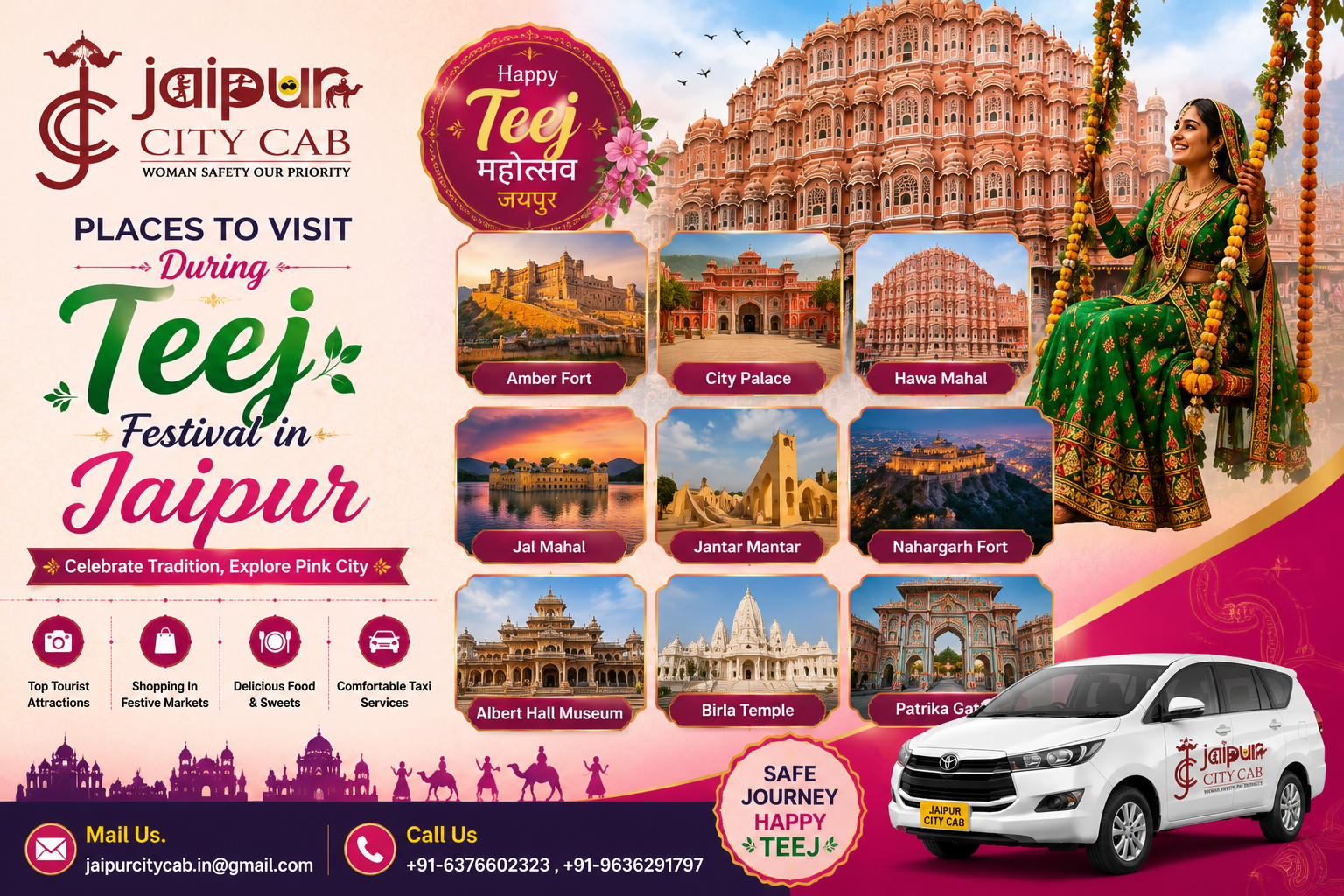
Teej travel should not be limited to the procession. Jaipur offers forts, palaces, museums, markets, temples and photography locations that can be combined with the festival. The best strategy is to explore monuments in the morning and visit the procession area later according to the official schedule.
1. Hawa Mahal
Hawa Mahal is one of Jaipur’s most famous landmarks and an ideal place to begin your old city tour. Its pink sandstone facade, hundreds of small windows and street-facing architecture make it a perfect symbol of Jaipur.
During Teej, the surrounding streets become more colorful and active. Visit early in the morning to avoid traffic and then continue towards City Palace and Jantar Mantar.
2. City Palace Jaipur
City Palace represents Jaipur’s royal history. The complex includes courtyards, museums, artistic gates, royal costumes and weapons. Its connection with Jaipur’s royal traditions makes it especially relevant during a heritage festival such as Teej.
3. Jantar Mantar
Located close to City Palace, Jantar Mantar is a historic astronomical observatory. It can be covered with Hawa Mahal and City Palace in a single morning sightseeing plan.
4. Amber Fort
Amber Fort is one of the grandest attractions in Jaipur. It is famous for Sheesh Mahal, Ganesh Pol, royal halls, courtyards and scenic hill views. Visit early morning and keep the afternoon or evening for the Teej celebration.
5. Jal Mahal
Jal Mahal stands in the middle of Man Sagar Lake and is a popular photography stop. It lies on the route between Jaipur city and Amber Fort, making it easy to include in a taxi sightseeing tour.
6. Nahargarh Fort
Nahargarh Fort offers panoramic views of Jaipur. It is ideal for sunset, but on the procession day you may need to choose between the fort and the festival depending on timing. Include Nahargarh on the previous or next day for a relaxed itinerary.
7. Jaigarh Fort
Jaigarh Fort is known for military architecture, fort walls and Jaivana Cannon. It can be combined with Amber Fort for a half-day tour.
8. Albert Hall Museum
Albert Hall Museum displays paintings, sculptures, carpets, coins and historical objects. The building looks beautiful in evening lighting, but traffic around central areas may be heavy during festivals.
9. Birla Temple
Birla Temple is a peaceful white marble temple near Moti Dungri. It is a good evening attraction on a day when you are not attending the procession.
10. Patrika Gate
Patrika Gate is known for colorful artwork and symmetrical corridors. It is a popular photography location and can be visited while traveling to or from Jaipur airport.
For a comfortable tour of these attractions, book a Jaipur local sightseeing cab and keep the festival area as a separate stop because traffic restrictions may affect the normal route.
One-Day Teej Festival Jaipur Itinerary
Morning: Fort and Lake Sightseeing
- Amber Fort
- Jal Mahal photography stop
- Traditional Jaipur breakfast
Start early so that you can complete Amber Fort before the temperature and crowd increase. Stop at Jal Mahal while returning to the city.
Afternoon: Old City Heritage Tour
- Hawa Mahal
- City Palace
- Jantar Mantar
- Lunch near the old city
Complete the monuments before roads become crowded for the procession. Ask your driver about the nearest permitted drop location.
Evening: Teej Procession and Market Experience
- Reach the viewing area early
- Watch folk performances
- Enjoy Teej procession photography
- Visit a nearby market if movement is allowed
- Return to hotel from the designated pickup point
Two-Day Teej Festival Jaipur Itinerary
Day 1: Jaipur Forts and Sunset
- Amber Fort
- Jaigarh Fort
- Jal Mahal
- Nahargarh Fort sunset
- Rajasthani dinner
Use the first day for hill forts and scenic places. This avoids mixing long-distance fort travel with festival traffic.
Day 2: Old City and Teej Celebration
- Hawa Mahal
- City Palace
- Jantar Mantar
- Johari Bazaar
- Teej procession viewing
- Festive food and shopping
A two-day plan is more comfortable for families, senior citizens and photographers because it provides enough time for both sightseeing and festival activities.
Teej Shopping Guide in Jaipur
Shopping is one of the most enjoyable parts of Teej Festival in Jaipur. Markets become filled with festive clothing, jewelry, bangles, mehndi products and traditional gifts. Evening shopping can be crowded, so visit earlier in the day if you prefer a relaxed experience.
Johari Bazaar
Johari Bazaar is famous for gemstones, kundan jewelry, meenakari work, silver ornaments and traditional bridal-style products. Always compare prices and ask for certification when buying expensive gemstones.
Tripolia Bazaar
Tripolia Bazaar is known for lac bangles, brassware, carpets and traditional household items. Lac bangles are especially popular during Teej.
Bapu Bazaar
Bapu Bazaar is popular for mojari shoes, block print fabrics, sarees, bags and souvenirs. It is suitable for travelers looking for affordable shopping.
Kishanpole Bazaar
Kishanpole Bazaar is known for textiles, wooden handicrafts and traditional products. It offers a more local shopping experience.
Nehru Bazaar
Nehru Bazaar is a good place for footwear, garments, gifts and budget souvenirs.
Best Items to Buy During Teej
- Lac bangles
- Green and red sarees
- Lehengas and traditional suits
- Kundan and meenakari jewelry
- Mehndi cones and decorative items
- Rajasthani mojari footwear
- Block print fabrics
- Handmade bags
- Traditional home décor
- Festival sweets
Food to Try During Teej Festival in Jaipur
Teej Festival is also associated with delicious sweets and traditional food. Jaipur offers both festive dishes and regular Rajasthani cuisine. Food shops can become crowded, so choose clean and trusted outlets.
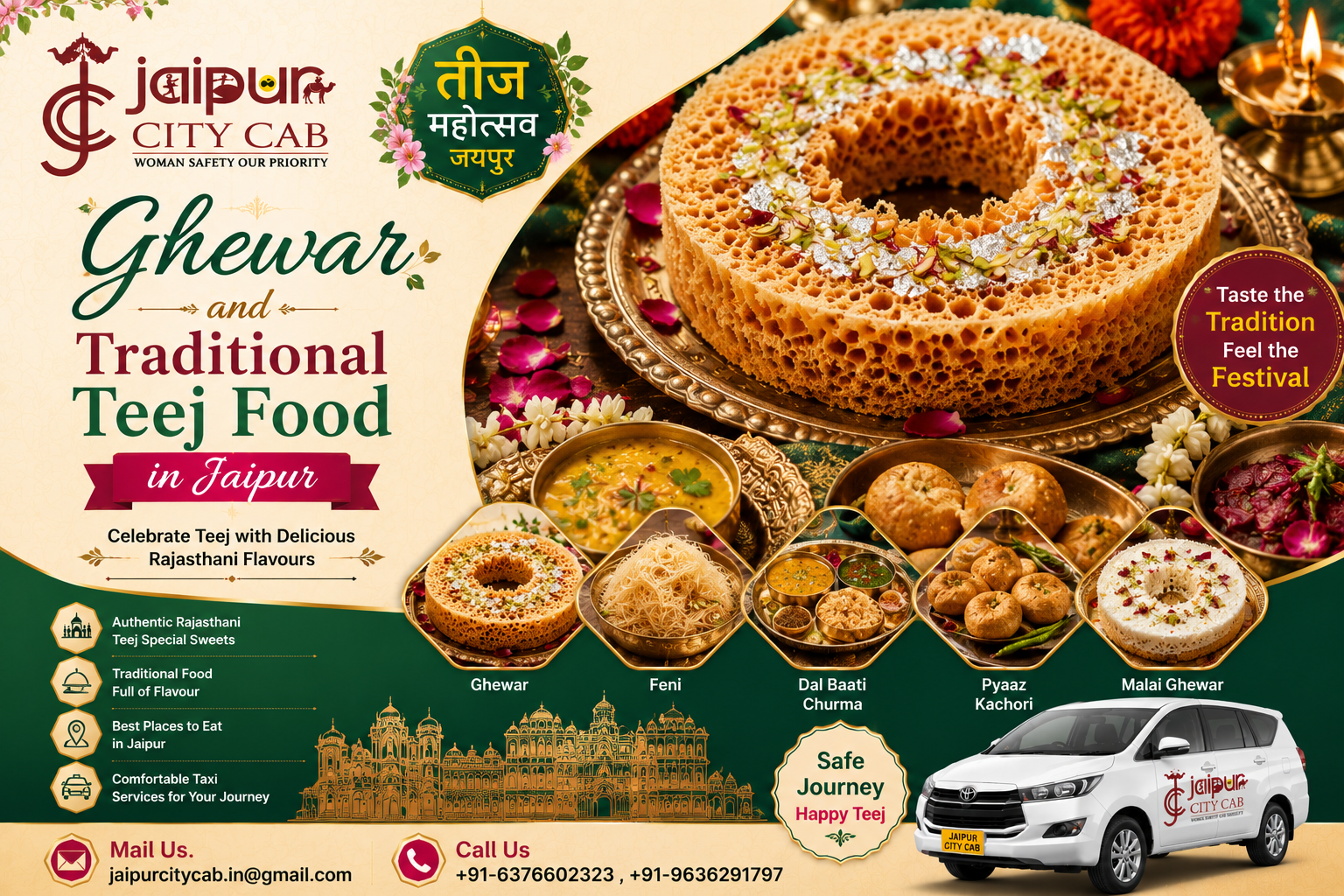
Ghewar
Ghewar is the most famous sweet associated with the monsoon and Teej season. It is available in plain, malai and mawa varieties. Many sweet shops prepare special festival collections.
Feni
Feni is another traditional festive item often enjoyed with milk. It is light, delicate and popular during seasonal celebrations.
Dal Baati Churma
Dal Baati Churma is one of Rajasthan’s signature meals. It includes baked baati, lentils and sweet churma. It is a good choice for travelers who want a complete traditional lunch or dinner.
Pyaaz Kachori
Pyaaz Kachori is a famous Jaipur snack filled with spicy onion mixture. It is commonly enjoyed for breakfast or evening tea.
Gatte Ki Sabzi
Gatte Ki Sabzi is a traditional curry made from gram flour dumplings and yogurt-based gravy. It is widely available in Rajasthani restaurants.
Other Foods to Try
- Mirchi Vada
- Mawa Kachori
- Rabri
- Kulhad Lassi
- Ker Sangri
- Bajra Roti
- Laal Maas
- Kadhi
Photography Tips for Teej Procession
Teej Festival offers excellent photography opportunities, but the crowd and movement can make shooting difficult. Plan your position before the procession arrives and avoid moving into the road.
- Arrive early and choose a safe fixed position.
- Use a zoom lens for close details from a distance.
- Keep extra battery and memory cards.
- Protect equipment from rain or moisture.
- Avoid flash near animals and performers.
- Ask permission before taking close portraits.
- Do not block the procession route.
- Capture wide frames showing Pink City architecture.
- Photograph costumes, bangles, musicians and decorations.
- Keep valuables secure in crowded areas.
Family Travel Tips During Teej
Families can enjoy Teej Festival comfortably with advance planning. The most important concern is crowd management. Parents should keep children close and choose a viewing area with easy entry and exit.
- Reach the procession area before the crowd becomes heavy.
- Carry drinking water and light snacks.
- Use comfortable footwear.
- Keep identification and contact details with children.
- Avoid the densest sections with senior citizens.
- Choose a pre-decided taxi pickup point.
- Keep rain protection during monsoon weather.
- Do not carry large bags or unnecessary valuables.
Teej Guide for International Tourists
International tourists often find Teej Festival fascinating because it shows traditional Rajasthan in a public setting. Visitors can see religious rituals, folk art, royal customs, clothing and community participation.
Wear modest and comfortable clothing, especially when visiting temples or religious areas. Keep a copy of your passport and hotel details. Use trusted transport and avoid accepting tours from unverified people near crowded locations.
English may not be widely spoken in every market, but most tourist areas have people who can communicate basic information. A professional local driver can help with routes, parking, pickup points and timing.
- Respect religious customs and processions.
- Ask permission for close photography.
- Carry bottled water.
- Use a registered hotel and verified cab.
- Keep local emergency contacts available.
- Avoid carrying excessive cash.
- Use digital payments where accepted.
Taxi Travel Tips During Teej Festival in Jaipur
Taxi travel is one of the most comfortable ways to explore Jaipur during Teej, but festival traffic requires careful planning. Roads inside the old city may be closed, diverted or restricted. Your driver may not be able to drop you directly beside the procession.
Book Your Cab in Advance
Demand for local taxis may increase during the festival. Advance booking helps you confirm the vehicle, pickup time and itinerary.
Keep Extra Travel Time
Traffic may move slowly around the old city. Keep additional time between sightseeing, hotel check-in and procession viewing.
Use a Designated Drop Point
Ask the driver to drop you at the nearest permitted location. Avoid insisting on entering blocked roads because this may waste time.
Fix the Return Pickup Location
Mobile networks can become busy in crowded areas. Decide a clear landmark or parking area for return pickup before leaving the cab.
Keep the Driver’s Number Saved
Save the cab and driver details on your phone. Also write the number on paper in case your phone battery is low.
Combine Sightseeing Smartly
Complete Amber Fort, Jal Mahal and other distant attractions in the morning. Keep the old city for the afternoon and festival hours.
Choose the Right Vehicle
| Vehicle Type | Best For | Travel Use |
|---|---|---|
| Sedan | Couples and small families | Airport transfer and local sightseeing |
| SUV | Family with luggage | Full-day Jaipur tour |
| Innova Crysta | Comfort-focused families | Festival tour and Rajasthan travel |
| Tempo Traveller | Large family or group | Group sightseeing and outstation tour |
Visitors can book local taxi service in Jaipur for festival travel and city sightseeing. Airport travelers can use Jaipur airport pickup and drop, while full-day tourists can select a Jaipur sightseeing cab package.
Why Choose Jaipur City Cab During Teej Festival?
Jaipur City Cab provides local and outstation taxi services for tourists visiting Jaipur. During a busy festival, having a pre-booked vehicle reduces confusion and makes travel more comfortable.
- Pickup from Jaipur airport and railway station
- Hotel-to-procession-area transfer
- Full-day Jaipur sightseeing packages
- Clean AC vehicles
- Sedan, SUV, Innova and group vehicles
- Experienced local drivers
- Customized festival itinerary
- Outstation Rajasthan travel options
- Family and group travel support
Tourists planning a longer holiday can combine Jaipur Teej Festival with Ajmer, Pushkar, Jodhpur, Udaipur or other Rajasthan destinations. A private cab allows visitors to continue their journey without booking separate transport for every city.
Important Safety and Etiquette Tips
- Follow police barricades and traffic instructions.
- Do not enter the procession road.
- Avoid touching ceremonial decorations.
- Maintain respectful distance from animals.
- Do not use flash photography near animals.
- Protect your wallet, phone and camera.
- Stay hydrated during humid weather.
- Carry an umbrella or light raincoat.
- Wear comfortable and modest clothing.
- Confirm official procession information before travel.
Best Reasons to Visit Jaipur During Teej
- Experience a traditional Rajasthan festival
- Watch a royal cultural procession
- See colorful folk costumes and performances
- Enjoy seasonal sweets such as Ghewar
- Shop for jewelry, bangles and textiles
- Photograph the Pink City during monsoon
- Combine festival travel with Jaipur sightseeing
- Explore Rajasthan’s living traditions
Frequently Asked Questions About Teej Festival in Jaipur
Q1. Why is Teej Festival famous in Jaipur?
Answer: Teej is famous in Jaipur because of its traditional royal procession, decorated palanquin of Teej Mata, folk performers, musicians, decorated animals and the historic Pink City setting.
Q2. Where can tourists watch the Teej procession in Jaipur?
Answer: The procession generally passes through selected old city areas. Tourists should verify the official route and choose an approved viewing point near markets or broader road sections.
Q3. What time should tourists reach the procession area?
Answer: Tourists should arrive well before the announced start time because roads may be closed and popular viewing areas can become crowded.
Q4. Can I book a taxi for Teej Festival sightseeing?
Answer: Yes, Jaipur City Cab provides local sightseeing, hotel pickup, airport transfer and customized festival travel. The taxi may drop visitors at the nearest permitted location due to road restrictions.
Q5. Which places can I visit with the Teej procession?
Answer: You can visit Hawa Mahal, City Palace, Jantar Mantar, Amber Fort, Jal Mahal, Jaigarh Fort, Nahargarh Fort and local markets during your Teej trip.
Q6. What should I wear during Teej Festival in Jaipur?
Answer: Wear comfortable, modest and breathable clothes. Carry an umbrella or raincoat because Teej is celebrated during the monsoon season.
Q7. Which sweet is famous during Teej?
Answer: Ghewar is the most famous sweet associated with Teej. Malai Ghewar, Mawa Ghewar and plain Ghewar are widely available in Jaipur.
Q8. Is Teej Festival suitable for family tourists?
Answer: Yes, families can enjoy the festival, but they should arrive early, avoid dense crowds and keep a fixed taxi pickup point.
Q9. Is photography allowed during the procession?
Answer: General photography is usually possible from public viewing areas, but visitors should follow local restrictions, avoid flash near animals and ask permission before close portraits.
Q10. How many days are enough for a Teej trip to Jaipur?
Answer: Two days are recommended. One day can be used for forts and sightseeing, while the second day can cover the old city, shopping and Teej procession.
Conclusion
Teej Festival in Jaipur is a wonderful opportunity to experience Rajasthan’s royal heritage, religious traditions, colorful markets, traditional clothing, folk performances and seasonal food. The Teej procession is the main attraction, but a complete trip should also include Hawa Mahal, City Palace, Amber Fort, Jal Mahal, Jantar Mantar and Jaipur’s old markets.
Festival traffic and road closures can make local travel difficult, which is why advance planning is important. Book trusted Jaipur taxi services with Jaipur City Cab for hotel pickup, airport transfer, sightseeing and customized Teej Festival travel. A private cab helps you explore Jaipur comfortably while your driver manages suitable routes, drop points and pickup locations.


