

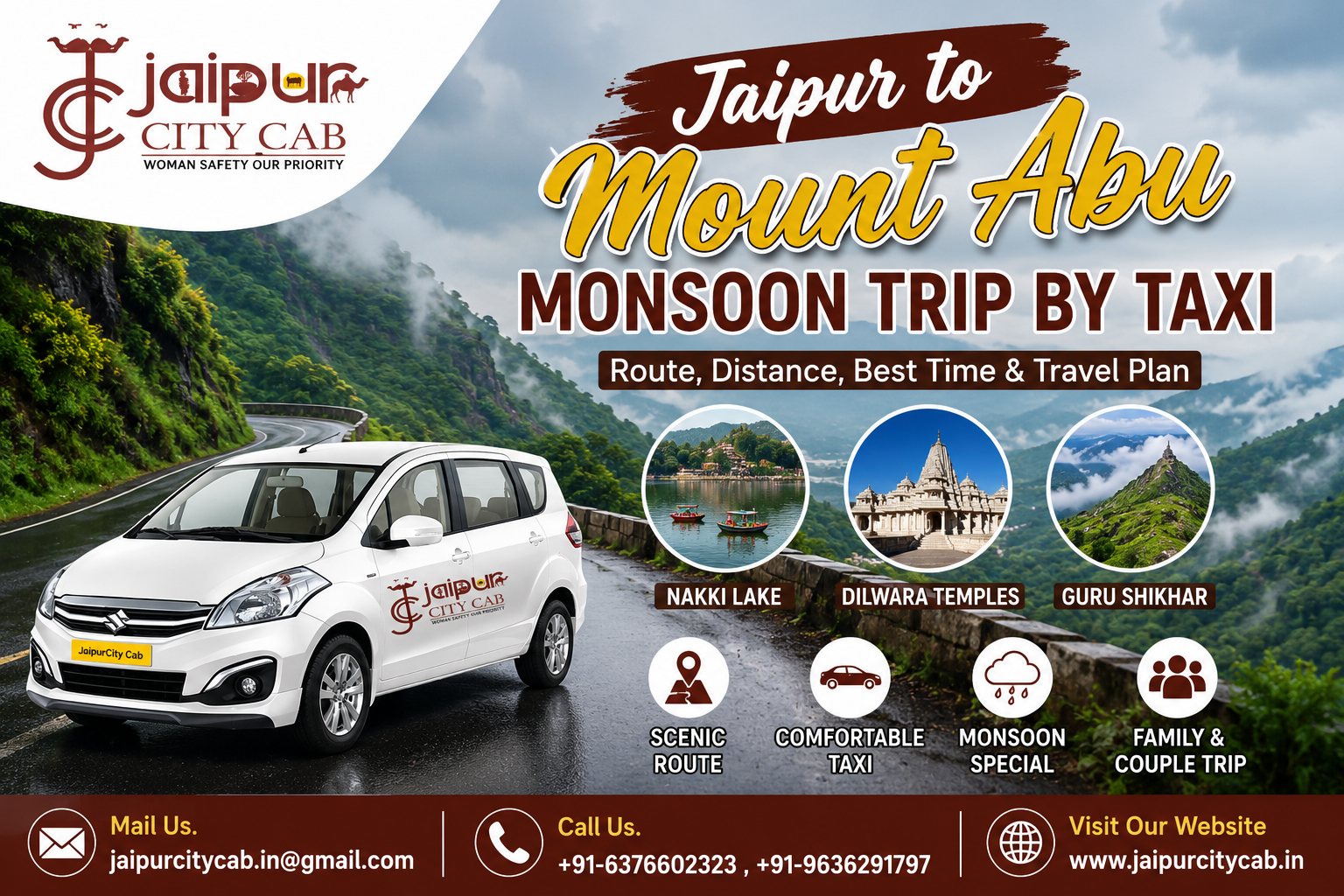
Jaipur to Mount Abu Monsoon Trip by Taxi: Route, Distance, Best Time & Travel Plan
A Jaipur to Mount Abu monsoon trip by taxi is one of the most refreshing road journeys you can plan in Rajasthan. Jaipur is known for royal forts, pink heritage streets and historic palaces, while Mount Abu offers forested hills, misty viewpoints, lakes, temples and cooler weather. Travelling between these two destinations gives tourists an opportunity to experience two completely different sides of Rajasthan in one memorable journey.
During the monsoon season, the dry landscapes of Rajasthan begin to change. The Aravalli hills around Mount Abu become greener, clouds move across the valleys, small seasonal streams appear and the temperature becomes more comfortable than the intense summer months. The final hill drive from Abu Road to Mount Abu looks especially beautiful when the surrounding slopes are covered with fresh greenery.
The Jaipur to Mount Abu road distance is approximately 485 to 495 kilometres, depending on your exact pickup point, hotel location, chosen highway and local traffic diversions. A direct taxi journey normally requires around 9 to 11 hours. The duration may increase during rain, road maintenance, weekend traffic, sightseeing stops or meal breaks.
Booking a private taxi is one of the most convenient ways to complete this journey. You can start from your home, Jaipur hotel, railway station or airport and travel directly to your Mount Abu accommodation. Families, honeymoon couples, senior citizens and groups can carry luggage comfortably, stop for food whenever required and travel without changing buses or trains.
For a comfortable outstation journey, tourists can book professional Jaipur taxi services with Jaipur City Cab. The service can be planned for one-way travel, round trips, multi-day Rajasthan tours, family vacations and customized Mount Abu sightseeing packages.
Passengers arriving by flight can arrange a Jaipur airport taxi service and begin the Mount Abu journey directly from Jaipur International Airport. Travelers who want to explore the Pink City before departure can also reserve a Jaipur sightseeing taxi for Amber Fort, Hawa Mahal, City Palace, Jal Mahal and other famous attractions.
Table of Contents
- Jaipur to Mount Abu Trip Overview
- Jaipur to Mount Abu Distance and Travel Time
- Best Jaipur to Mount Abu Taxi Route
- Alternative Routes to Mount Abu
- Why Visit Mount Abu During Monsoon?
- Best Time for Jaipur to Mount Abu Trip
- 3 Day Jaipur to Mount Abu Travel Plan
- 4 Day Relaxed Mount Abu Itinerary
- Best Places to Visit in Mount Abu
- Places to Visit Between Jaipur and Mount Abu
- Best Taxi for Jaipur to Mount Abu
- Mount Abu Family Trip
- Mount Abu Couple and Honeymoon Trip
- Monsoon Road Safety Tips
- Mount Abu Monsoon Packing List
- Food Guide for the Journey
- Jaipur to Mount Abu Trip Budget
- Why Travel by Private Taxi?
- Why Choose Jaipur City Cab?
- Frequently Asked Questions

Jaipur to Mount Abu Monsoon Trip Overview
Mount Abu is located in the southern part of Rajasthan near the Gujarat border. It is surrounded by the Aravalli Range and is known as the only established hill station in Rajasthan. The destination is popular among families, honeymoon couples, nature lovers, spiritual travelers, photographers and people looking for a short escape from hot city weather.
A road trip from Jaipur to Mount Abu begins with wide highways and gradually moves through different landscapes. Travelers pass through the Ajmer region, Beawar, parts of Pali district, Sirohi and Abu Road before starting the final hill climb. The road between Abu Road and Mount Abu contains turns, slopes and scenic valley views.
The complete journey can be planned as a direct transfer or as a multi-day holiday. A direct transfer is suitable for tourists who only need transportation. A three-day package allows one travel day, one full sightseeing day and one return day. A four-day package is more comfortable because it provides additional time for temples, viewpoints, boating, shopping and relaxed evenings.
| Travel Detail | Approximate Information |
|---|---|
| Starting City | Jaipur, Rajasthan |
| Destination | Mount Abu, Sirohi district, Rajasthan |
| Road Distance | Approximately 485 to 495 kilometres |
| Direct Driving Time | Approximately 9 to 11 hours |
| Recommended Trip Duration | 3 to 4 days |
| Popular Travel Season | July to September for greenery; October to March for clear sightseeing weather |
| Suitable Vehicles | Sedan, SUV, Innova Crysta and Tempo Traveller |
Jaipur to Mount Abu Distance and Travel Time
The road distance from Jaipur to Mount Abu is generally around 485 to 495 kilometres. The exact distance changes according to your starting point in Jaipur, the selected bypasses, hotel location in Mount Abu and temporary road diversions.
For example, pickup from Jaipur International Airport may produce a slightly different total distance than pickup from Bani Park, Vaishali Nagar, Amer Road or Jaipur railway station. Similarly, a hotel near Nakki Lake may require a different local drive than a resort located before the main town.
Under normal road conditions, the trip usually needs around 9 to 11 hours. This estimate should be treated as an approximate planning range instead of a guaranteed arrival time. Rainfall, fog, traffic, highway construction, meal breaks, temple visits and the final hill section can affect the duration.
For a comfortable monsoon journey, leaving Jaipur between 5:30 AM and 7:00 AM is usually practical. An early departure helps travelers cross Jaipur traffic, cover most of the highway during daylight and reach the Mount Abu hill road before evening.
Night driving on an unfamiliar hill road should be avoided whenever possible during heavy rain. Visibility may become low, road surfaces can remain wet and animals may cross forested sections. A daylight arrival also gives travelers enough time to check in and relax before evening sightseeing.
Best Route from Jaipur to Mount Abu by Taxi
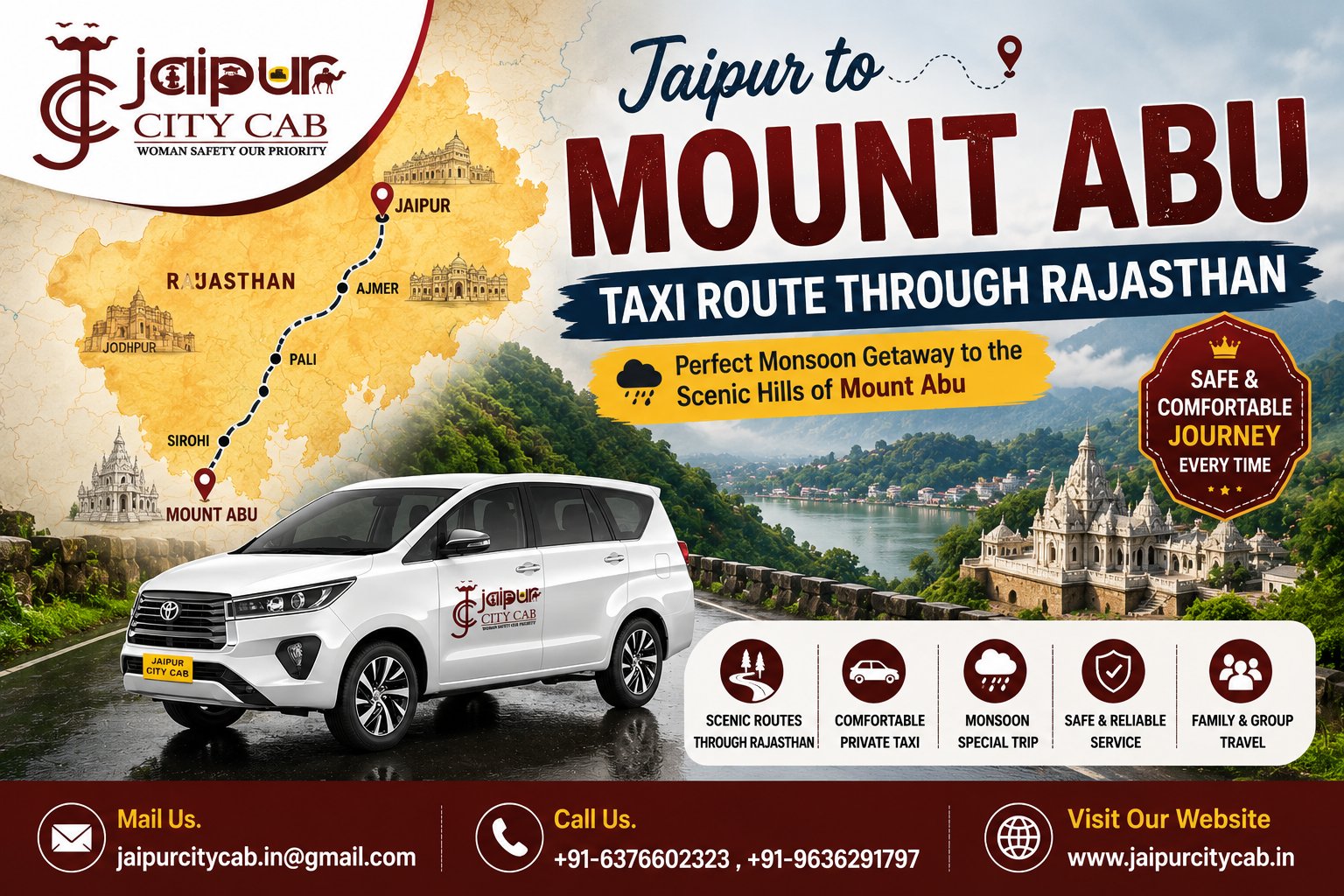
A commonly selected road route follows Jaipur, Kishangarh, Ajmer bypass, Beawar, Pali region, Sirohi, Abu Road and Mount Abu. Depending on road conditions and navigation updates, the driver may use connected sections of major national highways and bypass roads.
A practical route outline is:
Jaipur → Kishangarh → Ajmer Bypass → Beawar → Pali Region → Sirohi → Abu Road → Mount Abu
This route is preferred because it connects major towns and provides access to fuel stations, restaurants, washrooms, repair facilities and medical support along the way. Most of the journey is completed on broad road sections, while the final part from Abu Road to Mount Abu is a hill drive.
Jaipur to Kishangarh
The first section takes travelers from Jaipur towards Kishangarh and Ajmer. An early departure makes this part comfortable because city traffic is lighter. Kishangarh is known for marble industries, art and the scenic Kishangarh Dumping Yard area, although access conditions should be checked before planning a stop.
Kishangarh to Beawar
The route continues through the Ajmer bypass towards Beawar. Tourists who want to visit Ajmer or Pushkar should add extra time or an overnight halt rather than treating the visit as a quick highway stop. Ajmer Sharif Dargah and Pushkar Lake require proper city entry, parking and sightseeing time.
Beawar to Pali and Sirohi Region
The middle section includes long highway driving through changing landscapes. Travelers should take a proper breakfast or lunch break before continuing. Fuel, tyre pressure and essential vehicle checks are especially important before the final hill journey.
Abu Road to Mount Abu
Abu Road is the gateway town at the base of Mount Abu. From here, the road begins climbing through the hills. This section is shorter than the highway journey but may require additional time because of curves, tourist traffic, rain, mist and viewpoint stops.
The hill road should be driven carefully, especially during monsoon. Sudden braking, unnecessary overtaking and roadside parking at unsafe turns should be avoided. Travelers should use only designated stopping areas for photography.
Alternative Jaipur to Mount Abu Routes
Navigation applications may suggest alternative roads based on live traffic, construction work or weather conditions. Some routes may pass through different sections around Ajmer, Rajsamand, Udaipur or Pali. The shortest-looking route is not always the fastest or most comfortable during monsoon.
A professional outstation driver should choose the road after considering surface quality, rain conditions, traffic restrictions and daylight availability. Rural shortcuts may save a few kilometres but can become slow because of waterlogging, broken surfaces, animals or limited roadside facilities.
Travelers should avoid forcing the driver to follow an unfamiliar shortcut only because an application shows a slightly shorter distance. Road safety and vehicle suitability are more important than saving a small amount of time.
Route with Udaipur Extension
Tourists planning a longer Rajasthan holiday can combine Udaipur and Mount Abu. One practical plan is Jaipur to Udaipur, Udaipur sightseeing, Udaipur to Mount Abu and then return to Jaipur or continue towards Ahmedabad.
This option requires additional days but creates a beautiful monsoon itinerary. Udaipur offers lakes, palaces and green hills, while Mount Abu provides forest roads, viewpoints, temples and cooler weather.
Route with Ajmer and Pushkar Extension
Ajmer and Pushkar can also be included as part of a longer journey. A relaxed itinerary may include Jaipur to Pushkar, Pushkar sightseeing and overnight stay, followed by Pushkar to Mount Abu the next day.
This plan is better than trying to visit Ajmer, Pushkar and Mount Abu in a single day because temple visits, dargah access, local traffic and parking can require significant time.
Why Visit Mount Abu During Monsoon?
Mount Abu has a different personality during monsoon. The hills become greener, clouds move close to viewpoints and the temperature becomes cooler than the plains. Nakki Lake appears more atmospheric under cloudy skies, and forest roads look fresh after rainfall.
For photographers, monsoon provides soft light, reflections, mist and dramatic landscapes. Couples enjoy the romantic atmosphere, while families appreciate the cooler environment. Road travelers can witness the gradual transition from Jaipur’s urban scenery to the forested hills of southern Rajasthan.
However, a monsoon trip requires flexible expectations. Heavy rain may temporarily reduce visibility at viewpoints. Boating or outdoor activities may be paused. Some walking paths can become slippery, and travel time may increase. A successful monsoon holiday is less about covering every location quickly and more about enjoying the weather safely.
Major Monsoon Highlights
- Fresh greenery across the Aravalli hills
- Cooler weather compared with Jaipur
- Cloudy views around hilltop points
- Beautiful atmosphere near Nakki Lake
- Romantic weather for couples
- Improved landscape photography opportunities
- Pleasant forest drives around Mount Abu
- Fewer harsh daytime conditions than summer
Best Time for Jaipur to Mount Abu Trip
The best travel period depends on the type of experience you want. Monsoon travelers should consider July to September for greenery and cloudy weather. Visitors who prefer clearer viewpoints and comfortable sightseeing often choose October to March. Summer visitors travel to Mount Abu for relief from the heat, but weekends may become crowded.
| Season | Months | Travel Experience | Important Consideration |
|---|---|---|---|
| Monsoon | July to September | Green hills, clouds, rain and romantic weather | Wet roads, slippery paths and changing visibility |
| Winter | October to February | Cool weather and clearer sightseeing conditions | Carry warm clothes, especially at night |
| Spring | March | Pleasant daytime travel | Temperature begins rising gradually |
| Summer | April to June | Hill-station break from Rajasthan heat | Weekends and holidays may be crowded |
For a monsoon road trip, check the weather forecast one or two days before departure. Avoid rigid activity bookings when heavy rain is expected. Keep enough time between sightseeing stops and allow the driver to adjust the schedule according to road conditions.
3 Day Jaipur to Mount Abu Monsoon Travel Plan
A three-day trip is suitable for working professionals, couples and families who want a quick hill-station holiday. It includes one day for travel, one full day for Mount Abu sightseeing and one day for return.
Day 1: Jaipur to Mount Abu by Taxi
Start from Jaipur between 5:30 AM and 6:30 AM. Your taxi can pick you up from your home, hotel, Jaipur airport or railway station. Carry light breakfast or stop at a clean highway restaurant after leaving the city.
Continue through Kishangarh, Ajmer bypass, Beawar and the Pali-Sirohi region. Plan one breakfast break, one lunch break and short rest stops. Avoid unnecessary long halts because the complete journey is already lengthy.
Reach Abu Road in the afternoon and begin the hill drive towards Mount Abu. During monsoon, keep the windows closed in heavy rain and avoid stopping at unsafe roadside curves. Reach your hotel by evening, complete check-in and rest.
If weather and arrival time permit, visit Nakki Lake for a peaceful walk. Do not schedule distant sightseeing on the arrival day because the long road journey may be tiring.
Day 2: Full-Day Mount Abu Sightseeing
Begin the second day after breakfast with Dilwara Jain Temples. These temples are famous for detailed marble craftsmanship and peaceful surroundings. Visitors should follow clothing, photography and entry rules applicable at the site.
Continue towards Guru Shikhar, one of the most famous high points in the Mount Abu region. The road offers hill scenery, but cloud cover may affect visibility during monsoon. Walk carefully on wet steps and wear shoes with good grip.
After Guru Shikhar, visit Achalgarh Fort area and Achaleshwar Mahadev Temple if the schedule allows. Stop for lunch at a local restaurant and then proceed towards Trevor’s Tank or another nature point only if weather and access conditions are suitable.
In the evening, return to Nakki Lake. Enjoy boating if operations are open and weather is safe. Walk around the market, buy local snacks or souvenirs and then visit Sunset Point if the sky is clear enough.
- Dilwara Jain Temples
- Guru Shikhar
- Achalgarh
- Achaleshwar Mahadev Temple
- Nakki Lake
- Local Market
- Sunset Point
Day 3: Mount Abu to Jaipur Return
Check out after an early breakfast and begin the return drive. If you missed Nakki Lake or a nearby attraction on the first two days, visit it early without delaying departure too much.
Descend carefully from Mount Abu to Abu Road and continue towards Jaipur. Take scheduled meal and rest breaks. A direct return generally takes most of the day, so avoid adding major sightseeing unless you are prepared for a late arrival.
Your taxi can drop you at Jaipur airport, railway station, hotel or home. If you have an evening flight or train, keep a generous time buffer because rain, traffic or roadwork may delay arrival.

4 Day Relaxed Jaipur to Mount Abu Itinerary
A four-day itinerary is better for families with children, senior citizens and couples who do not want a rushed holiday. The additional day allows visitors to divide temples, viewpoints and lake activities comfortably.
Day 1: Jaipur to Mount Abu
Leave Jaipur early, follow the recommended highway route and reach Mount Abu by evening. Check in, rest and visit Nakki Lake only if time and weather permit.
Day 2: Temples and Northern Mount Abu
- Dilwara Jain Temples
- Guru Shikhar
- Achalgarh Fort area
- Achaleshwar Mahadev Temple
- Peace Park, subject to timing and access
This day focuses on locations away from the central market. Start early to avoid weekend traffic. Keep rain jackets or umbrellas in the vehicle and avoid carrying unnecessary bags during temple visits.
Day 3: Lake, Viewpoints and Local Market
- Nakki Lake
- Toad Rock viewpoint, if the path is safe
- Honeymoon Point
- Sunset Point
- Mount Abu local market
- Optional nature stop depending on weather
Keep this day flexible. If rain is heavy in the morning, start with covered or nearby attractions and move to viewpoints when visibility improves. Do not climb wet rocks or cross barriers for photographs.
Day 4: Mount Abu to Jaipur
Have breakfast, check out and begin the return journey. A four-day plan provides better rest and reduces the pressure to complete every attraction in a single sightseeing day.
Best Places to Visit in Mount Abu During Monsoon
1. Nakki Lake
Nakki Lake is the most recognizable attraction in Mount Abu. Surrounded by hills, markets and walking areas, it is ideal for evening relaxation. During monsoon, cloudy skies and green surroundings create a scenic atmosphere.
Boating depends on weather and operational conditions. Visitors should follow local safety instructions and avoid insisting on boating during storms or strong rain.
2. Dilwara Jain Temples
The Dilwara Jain Temples are famous for intricate marble carvings, artistic pillars, ceilings and spiritual importance. The complex is one of the most significant cultural attractions near Mount Abu.
Visitors should maintain silence, dress respectfully and follow rules regarding mobile phones, bags and photography. Temple timings should be confirmed locally before planning the day.
3. Guru Shikhar
Guru Shikhar is a popular hilltop destination and offers wide views when the sky is clear. During monsoon, clouds can make the experience dramatic, although visibility may change quickly.
The final section includes steps, which can become slippery after rain. Senior citizens and travelers with mobility concerns should assess conditions before climbing.
4. Achalgarh Fort
Achalgarh offers historic surroundings, hill views and access to the Achaleshwar Mahadev Temple area. The ruins and natural setting attract history lovers and photographers.
During monsoon, travelers should avoid isolated or slippery sections and stay on established paths.
5. Achaleshwar Mahadev Temple
Achaleshwar Mahadev Temple is an important spiritual stop near Achalgarh. Visitors can include it with Guru Shikhar and nearby attractions to reduce repeated driving.
6. Sunset Point
Sunset Point is popular for evening views. During monsoon, the actual sunset may be hidden behind clouds, but the misty hills can still create a beautiful atmosphere.
Weekend crowds and traffic may increase near the approach road. Plan enough time and avoid walking on unsafe edges.
7. Honeymoon Point
Honeymoon Point attracts couples and photographers because of its valley views. Cloudy weather gives the location a romantic character. Visibility may vary, so the visit should remain optional rather than fixed.
8. Toad Rock
Toad Rock is a natural rock formation near Nakki Lake. It is visible from the lake area and can be approached through a walking route. The climb should be avoided during heavy rain or when the surface is slippery.
9. Trevor’s Tank
Trevor’s Tank is associated with nature, birds and forest surroundings. However, monsoon rain can affect access and outdoor exploration. Check local conditions before including it in the itinerary.
10. Mount Abu Wildlife Sanctuary Area
The forested environment around Mount Abu becomes especially green during monsoon. Wildlife and nature enthusiasts may enjoy scenic drives, but all protected-area rules should be followed. Avoid feeding animals, littering or entering restricted paths.
Places to Visit Between Jaipur and Mount Abu
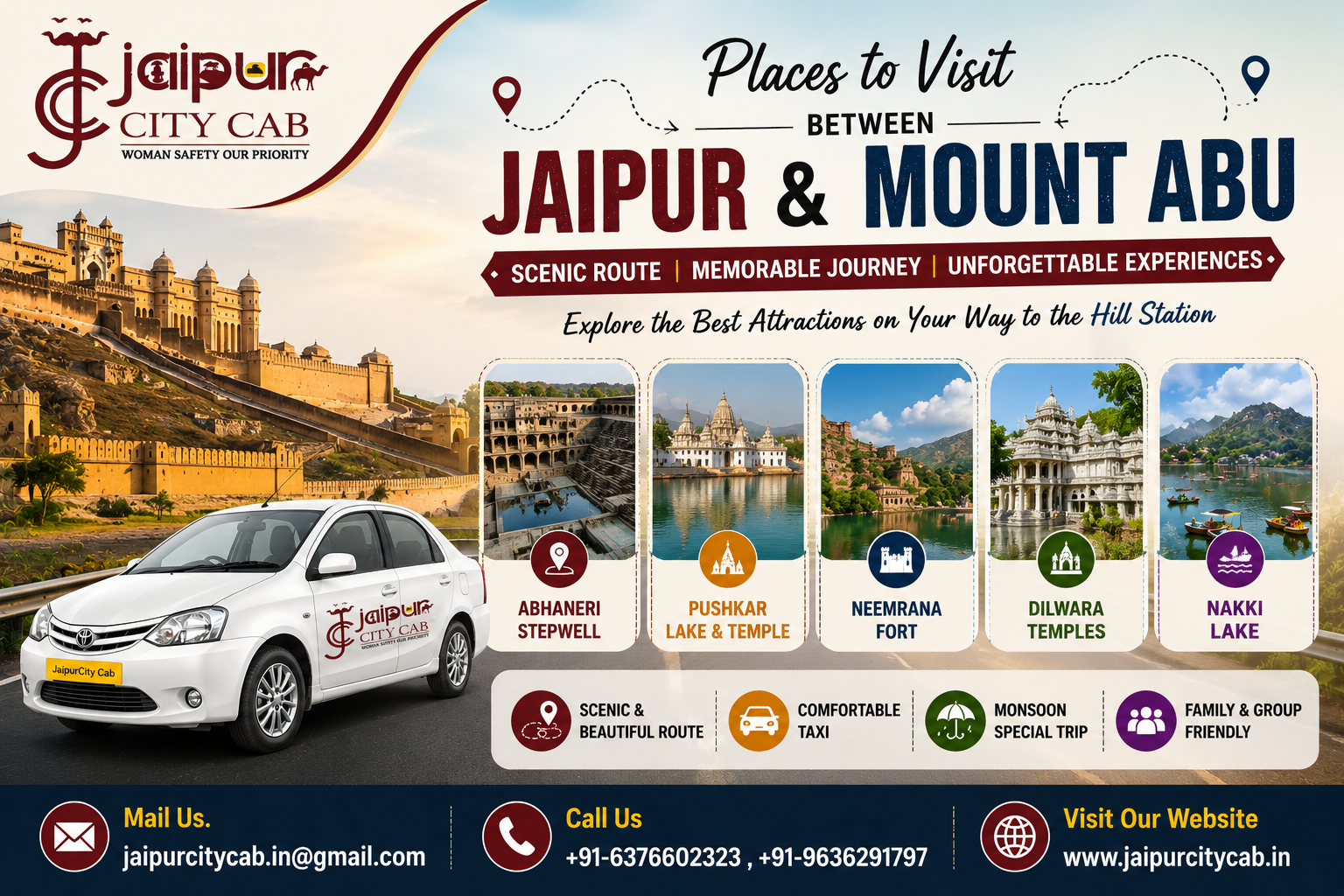
The direct Jaipur to Mount Abu journey is already long. Therefore, en-route sightseeing should only be added when you have extra days. Trying to include several attractions during a same-day transfer can result in a late hill arrival.
Ajmer
Ajmer is known for Ajmer Sharif Dargah, Ana Sagar Lake and historical attractions. A proper visit may require city traffic navigation, parking and walking time. It is better included with an overnight stay or an extended itinerary.
Pushkar
Pushkar is famous for Brahma Temple, Pushkar Lake, ghats, cafés and colorful markets. It is not a simple roadside stop and deserves at least several hours.
Kishangarh
Kishangarh is known for marble, paintings and selected photography locations. Travelers should check whether a particular site is officially accessible before making a diversion.
Ranakpur Extension
Ranakpur Jain Temple can be added to a longer Udaipur–Mount Abu plan. It is not recommended as a casual stop on a tightly scheduled direct Jaipur–Mount Abu transfer because it involves additional travel and sightseeing time.
Udaipur Extension
Udaipur is an excellent extension for travelers with five or more days. A route covering Jaipur, Udaipur and Mount Abu combines heritage palaces, lakes, hill scenery and monsoon landscapes.
Best Vehicle for Jaipur to Mount Abu Taxi Trip
Vehicle selection should depend on passenger count, luggage, comfort expectations and budget. The journey is long, so seating space matters more than it does for a short local ride.
| Vehicle Type | Recommended Passengers | Best Use |
|---|---|---|
| Sedan | 1 to 3 passengers | Couples, solo travelers and small families with limited luggage |
| SUV | 4 to 6 passengers | Families needing additional luggage and seating space |
| Innova / Innova Crysta | 4 to 6 passengers | Comfortable long-distance family and senior-citizen travel |
| Tempo Traveller | 7 or more passengers | Group tours, large families and corporate trips |
Do not select a small vehicle only to reduce cost if passengers will be uncomfortable for ten hours. Consider luggage size, child seats, senior-citizen mobility and monsoon bags before confirming the cab.
Jaipur to Mount Abu Family Trip by Taxi
Mount Abu is a family-friendly destination because it offers lakes, temples, viewpoints, markets and pleasant weather. A private taxi allows families to carry snacks, medicines, rain protection and children’s essentials without changing vehicles.
Families with senior citizens should choose a relaxed four-day plan. Avoid placing Guru Shikhar, Achalgarh, Dilwara Temples, Nakki Lake and Sunset Point in a rushed single-day schedule. Add rest periods and confirm whether stairs or slippery walking routes are suitable for every traveler.
Family Travel Suggestions
- Choose an SUV or Innova for better comfort.
- Carry prescribed medicines and basic first-aid items.
- Keep dry snacks and drinking water in the cab.
- Book a hotel with vehicle access and covered reception.
- Avoid steep walks during heavy rain.
- Keep an extra clothing set for children.
- Do not schedule a flight immediately after the expected return time.
Jaipur to Mount Abu Couple and Honeymoon Trip
Mount Abu is one of Rajasthan’s popular romantic destinations. Monsoon clouds, Nakki Lake, forested roads and cool evenings create a peaceful environment for couples.
A private cab gives couples privacy and schedule flexibility. They can stop at safe viewpoints, spend more time near the lake, enjoy café visits and choose a relaxed hotel without depending on group-tour timing.
Romantic Experiences in Mount Abu
- Evening walk around Nakki Lake
- Boating when weather conditions are safe
- Cloudy valley views from Honeymoon Point
- Sunset Point visit on a clear evening
- Hill-view hotel stay
- Local café and market exploration
- Scenic photography at designated safe locations
Monsoon Safety Tips for Jaipur to Mount Abu Road Trip
Monsoon travel can be beautiful, but safety must remain the priority. Road and weather conditions can change quickly, especially in the final hill section.
- Check weather and road updates before leaving Jaipur.
- Prefer an early morning departure.
- Avoid unnecessary night driving on hill roads.
- Use a vehicle with well-maintained tyres, brakes, wipers and lights.
- Do not stop the taxi at blind curves for photographs.
- Avoid walking on wet rocks and unprotected edges.
- Follow local instructions regarding boating and viewpoints.
- Keep electronic devices inside waterproof covers.
- Maintain additional travel time for rain delays.
- Do not pressure the driver to maintain high speed.
- Avoid rural shortcuts during heavy rain.
- Keep emergency contacts, hotel details and identification documents accessible.

Mount Abu Monsoon Packing List
- Lightweight raincoat or poncho
- Compact umbrella
- Shoes with strong grip
- Extra socks
- Quick-dry clothing
- Light jacket for cool evenings
- Waterproof mobile pouch
- Power bank and charging cables
- Personal medicines
- Basic first-aid supplies
- Identity proof
- Reusable water bottle
- Dry snacks
- Small towel and extra clothing bag
Food Guide for Jaipur to Mount Abu Journey
The highway journey passes through major towns where travelers can find vegetarian restaurants, highway dining facilities, tea stalls and fuel-station food courts. Choose clean, well-reviewed and reasonably busy establishments.
Avoid very heavy meals before the hill drive if you are sensitive to motion sickness. Eat a balanced lunch, stay hydrated and keep light snacks in the vehicle.
Foods to Try in Mount Abu
- Rajasthani thali
- Dal baati churma
- Gatte ki sabzi
- Hot pakoras during rainy weather
- Tea and coffee near the market
- Local sweets
- North Indian and Gujarati meals
Tourists should check restaurant hygiene and food preferences before ordering. Carry packaged snacks for children, senior citizens and travelers with dietary restrictions.
Jaipur to Mount Abu Trip Budget Planning
The total budget depends on the vehicle category, trip duration, hotel type, season, passenger count, meals, parking, tolls and sightseeing activities. Taxi fares should be confirmed directly before booking because fuel prices, seasonal demand and route conditions can change.
| Expense Category | Budget Consideration |
|---|---|
| Private Taxi | Depends on vehicle, kilometres, trip duration, driver allowance and route |
| Hotel | Budget guest house, mid-range hotel, resort or premium hill-view stay |
| Food | Highway meals, local restaurants, cafés and hotel dining |
| Sightseeing | Entry tickets, boating, parking and optional guide services |
| Shopping | Souvenirs, local products and personal purchases |
| Emergency Buffer | Keep additional money for weather delays or itinerary changes |
Before confirming the taxi, ask whether the quote includes toll tax, state tax, parking, driver allowance, night charges and local sightseeing kilometres. A transparent quote prevents confusion during the trip.
Why Travel from Jaipur to Mount Abu by Private Taxi?
Although tourists can combine trains and local transport, a private taxi is more convenient for travelers who prefer direct pickup, flexible breaks and complete luggage control. Mount Abu itself is located above Abu Road, so train passengers still require road transport for the final hill journey.
Advantages of a Private Cab
- Pickup from your Jaipur home, hotel, airport or railway station
- Direct drop at your Mount Abu hotel
- No repeated luggage loading and unloading
- Flexible breakfast, lunch and rest breaks
- Better comfort for children and senior citizens
- Ability to customize sightseeing
- One vehicle for highway travel and local Mount Abu sightseeing
- Suitable for family, couples and group tours
- Convenient round-trip planning
- Safer schedule adjustments during monsoon weather
Why Choose Jaipur City Cab for Mount Abu Trip?
Jaipur City Cab provides taxi options for local Jaipur travel, airport transfers, outstation journeys and customized Rajasthan tours. Travelers can plan a one-way Jaipur to Mount Abu drop, round trip, multi-day family package or a combined Udaipur and Mount Abu itinerary.
- Experienced outstation drivers
- Sedan, SUV, Innova and group vehicle options
- Pickup from Jaipur airport, station, hotel or residence
- Customized 3 day and 4 day tour plans
- Comfortable AC vehicles
- Local Jaipur sightseeing options
- Rajasthan outstation tour planning
- Flexible family and couple packages
Travelers can review general vehicle and fare information through the Jaipur taxi fare guide. Final charges should be confirmed according to the selected vehicle, travel dates, pickup location and complete itinerary.
Suggested Jaipur and Mount Abu Combined Plan
Travelers arriving from outside Rajasthan can add Jaipur sightseeing before their Mount Abu trip. This creates a balanced heritage and nature holiday.
Day 1: Jaipur Arrival and City Attractions
- Hawa Mahal
- City Palace
- Jantar Mantar
- Albert Hall Museum
- Birla Temple
Day 2: Jaipur Forts
- Amber Fort
- Jal Mahal
- Jaigarh Fort
- Nahargarh Fort
Day 3: Jaipur to Mount Abu
Start early and complete the highway journey with planned meal breaks. Reach Mount Abu by evening.
Day 4 and Day 5: Mount Abu Sightseeing
Divide Dilwara Jain Temples, Guru Shikhar, Achalgarh, Nakki Lake, Sunset Point and local markets across two days.
Day 6: Return to Jaipur
Leave Mount Abu early and reach Jaipur by evening, depending on road and weather conditions.
Common Planning Mistakes to Avoid
- Starting late from Jaipur and reaching the hill road at night
- Assuming the journey will always finish in exactly nine hours
- Adding Ajmer, Pushkar and Udaipur to a direct same-day transfer
- Booking a vehicle too small for passengers and luggage
- Ignoring weather forecasts during monsoon
- Planning every viewpoint without allowing for cloud cover
- Wearing smooth footwear on wet walking paths
- Booking a return flight with no delay buffer
- Not confirming toll, parking and driver allowance
- Stopping at unsafe hill-road curves for photographs
Frequently Asked Questions About Jaipur to Mount Abu Monsoon Trip
Q1. What is the distance from Jaipur to Mount Abu by road?
Answer: The Jaipur to Mount Abu road distance is approximately 485 to 495 kilometres, depending on the pickup location and selected route.
Q2. How much time does a Jaipur to Mount Abu taxi take?
Answer: A direct taxi normally takes around 9 to 11 hours. Rain, traffic, roadwork, meal breaks and hill-road conditions can increase the duration.
Q3. Is Mount Abu good to visit during monsoon?
Answer: Yes, monsoon brings greenery, clouds and cooler weather to Mount Abu. Travelers should remain flexible because rain can affect viewpoints, boating and outdoor activities.
Q4. Which months are best for a Mount Abu monsoon trip?
Answer: July to September is the main monsoon period for travelers seeking green scenery and cloudy hill views.
Q5. Which route is best from Jaipur to Mount Abu?
Answer: A commonly used route goes through Kishangarh, Ajmer bypass, Beawar, the Pali-Sirohi region, Abu Road and Mount Abu. The driver may adjust the route according to live road conditions.
Q6. How many days are enough for a Jaipur to Mount Abu trip?
Answer: Three days are suitable for a quick trip, while four days provide a more comfortable sightseeing experience.
Q7. Can families travel from Jaipur to Mount Abu by taxi?
Answer: Yes, a private taxi is convenient for families because it provides direct pickup, luggage space, flexible breaks and hotel drop.
Q8. Which vehicle is best for the Mount Abu road trip?
Answer: A sedan is suitable for two or three travelers, while an SUV or Innova is more comfortable for families. Large groups can select a Tempo Traveller.
Q9. Can Jaipur airport pickup be included?
Answer: Yes, travelers can arrange pickup from Jaipur International Airport and continue directly to Mount Abu or stay in Jaipur before departure.
Q10. Is night driving recommended during monsoon?
Answer: Daylight travel is preferable, especially for the Abu Road to Mount Abu hill section. Heavy rain, fog and wet roads can reduce visibility at night.
Q11. Can Udaipur be included with Mount Abu?
Answer: Yes, Udaipur and Mount Abu can be combined in a longer four-day, five-day or six-day Rajasthan itinerary.
Q12. What should tourists carry during a monsoon trip?
Answer: Carry a raincoat, umbrella, non-slip shoes, extra socks, light jacket, waterproof mobile cover, medicines, identity proof and dry snacks.
Conclusion
A Jaipur to Mount Abu monsoon trip by taxi is a wonderful choice for travelers who want to combine a scenic Rajasthan road journey with green hills, lakes, temples and cool weather. The route covers approximately 485 to 495 kilometres and normally requires around 9 to 11 hours of driving, depending on weather, traffic and rest stops.
A three-day itinerary is suitable for a quick getaway, while a four-day itinerary provides more time for Dilwara Jain Temples, Guru Shikhar, Achalgarh, Nakki Lake, Sunset Point and local market visits. During monsoon, travelers should start early, keep the itinerary flexible and prioritize safe driving over fixed arrival times.
To make the journey comfortable, book trusted Jaipur taxi services with Jaipur City Cab for a private Jaipur to Mount Abu cab, airport pickup, family tour, honeymoon trip, round journey or customized Rajasthan travel package.


