

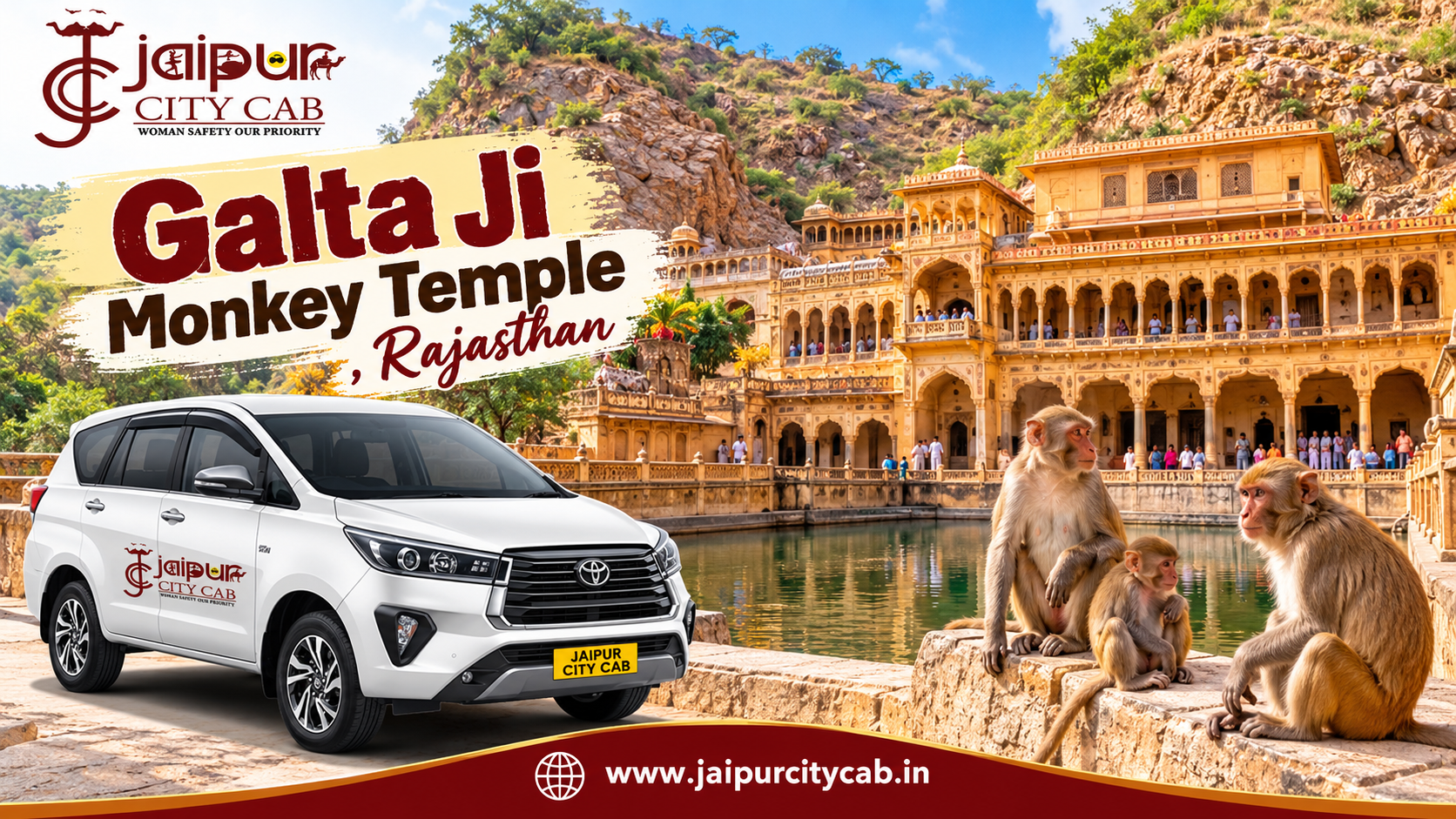

Galta Ji Monkey Temple, Rajasthan | History, Best Time to Visit, Route & Taxi Service Guide
Rajasthan is widely admired for its magnificent forts, royal palaces, colourful markets and remarkable cultural traditions. Yet beyond its celebrated monuments, the state is also home to sacred destinations where natural landscapes, ancient religious practices and architectural heritage come together. One such destination is Galta Ji Monkey Temple in Jaipur, a beautiful pilgrimage complex situated among the rocky hills on the eastern side of Rajasthan's capital city.
Commonly known as the Monkey Temple of Jaipur, Galta Ji is much more than an ordinary tourist attraction. The complex is associated with Hindu religious traditions, sacred water reservoirs, historic temples and the spiritual heritage of the Aravalli landscape. Its peaceful surroundings and distinctive architecture make it a rewarding destination for pilgrims, photographers, families, history enthusiasts and travellers interested in discovering a different side of Jaipur.
While Jaipur is often introduced through Amber Fort, Hawa Mahal, City Palace and Jantar Mantar, Galta Ji offers an experience that is considerably different from conventional royal sightseeing. Here, visitors encounter temple courtyards, natural springs, stone stairways, devotional activities and hillsides that create a memorable atmosphere.
The presence of monkeys throughout parts of the complex has given Galta Ji its popular tourist name. However, its religious importance comes from its association with sacred water, pilgrimage traditions and the historic Galta Peeth. Understanding this distinction allows visitors to appreciate the destination beyond its familiar identity as a monkey temple.
For travellers planning a Galta Ji Temple tour by taxi, a private cab offers the convenience of hotel pickup, flexible departure times and the opportunity to combine the temple with other important Jaipur attractions. Visitors can explore the temple in the morning and continue towards nearby heritage destinations according to their available time.
This comprehensive guide explains the history of Galta Ji, its religious significance, architecture, sacred kunds, best visiting season, approximate distance from Jaipur, road routes, taxi service options, fare considerations, photography opportunities, recommended itineraries and practical travel advice.
Travellers can also explore Jaipur taxi services to arrange customised sightseeing journeys covering Galta Ji and other destinations around the Pink City.
Galta Ji is an active religious complex, and access to individual shrines, kunds and temple areas may vary according to local management, religious activities and maintenance requirements. Entry charges, photography rules and opening hours should be confirmed before travelling. The distances, travel times and taxi cost examples in this article are approximate planning information, not guaranteed quotations.
Table of Contents
- Galta Ji Monkey Temple – An Introduction
- History of Galta Ji Temple Jaipur
- Religious Significance of Galta Ji
- Temple Architecture and Aravalli Landscape
- Sacred Kunds and Natural Springs
- Why Galta Ji Is Called Monkey Temple
- Main Attractions Inside Galta Ji
- Galta Ji Temple Distance and Travel Time
- Best Route to Galta Ji Temple by Cab
- Galta Ji Temple Timings and Entry Information
- Best Time to Visit Galta Ji Monkey Temple
- Jaipur to Galta Ji Taxi Fare Guide
- Best Taxi Options for Galta Ji
- Half-Day Galta Ji Temple Tour Itinerary
- One-Day Jaipur Temple Sightseeing Itinerary
- Two-Day Jaipur Heritage and Temple Tour
- Places to Visit Near Galta Ji Temple
- Photography and Cultural Experiences
- Galta Ji Tour for Families and Senior Citizens
- Important Travel Tips
- Why Choose Jaipur City Cab?
- Frequently Asked Questions
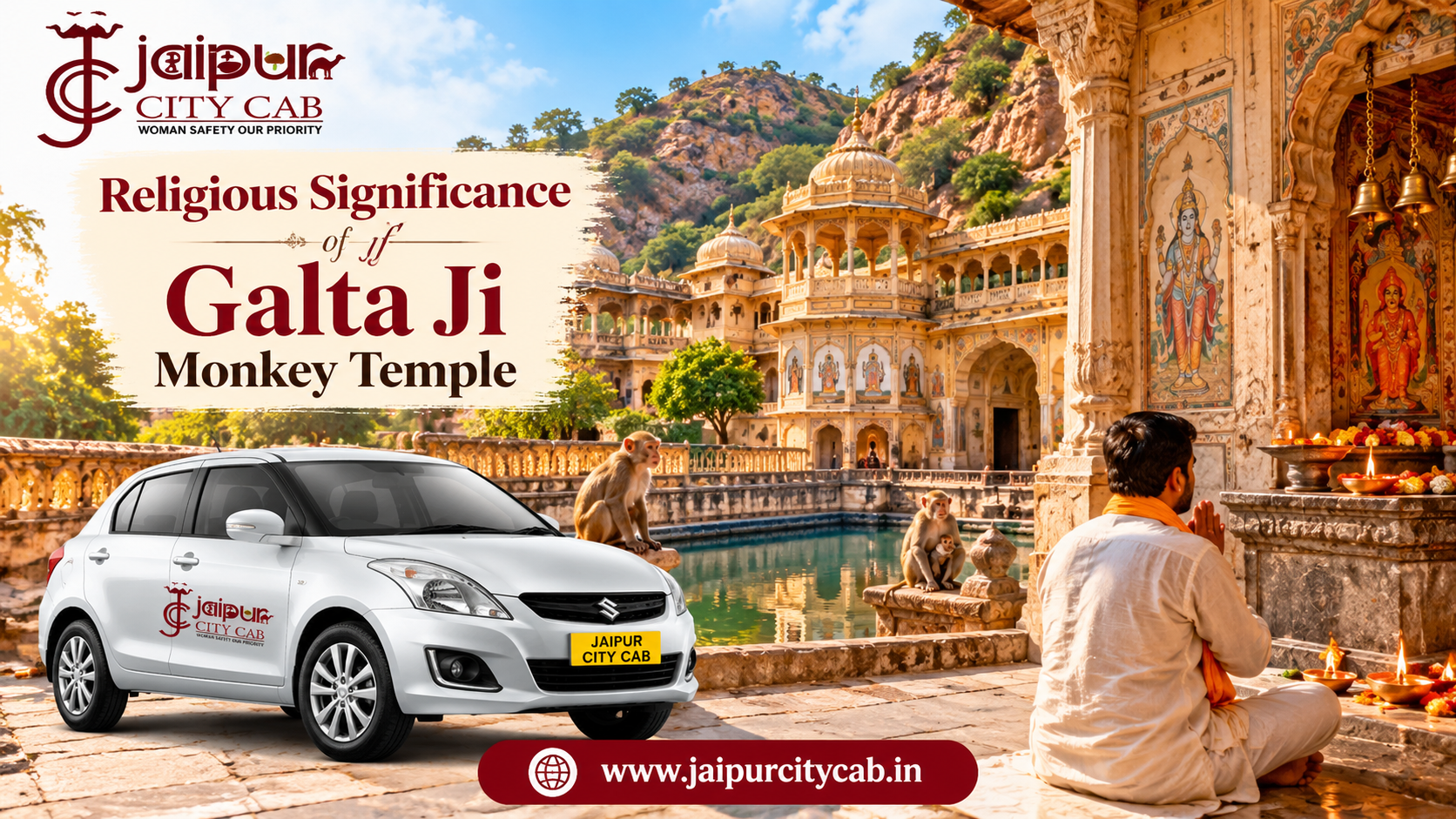
Galta Ji Monkey Temple – A Sacred Retreat Among Jaipur's Hills
Galta Ji is situated within a valley-like setting surrounded by rocky hills. The approach to the temple introduces visitors to a landscape that contrasts with the crowded streets and commercial areas of central Jaipur. As the road moves towards the eastern hills, the surroundings gradually become quieter and the distinctive character of the pilgrimage site begins to emerge.
The temple complex contains historic religious structures, sacred water tanks, pathways and gathering spaces used by devotees. Its position among the hills gives it a natural setting that is unusual when compared with many urban temples. This combination of architecture and geography is one of the principal reasons why Galta Ji has become an important destination on the Jaipur sightseeing circuit.
Visitors often arrive expecting to see monkeys and ancient buildings, but the experience becomes more meaningful when they understand the religious role of the complex. Galta Ji has long been associated with pilgrimage and spiritual practice. The flowing water, stone reservoirs and shrines contribute to its identity as a sacred place rather than simply a historic monument.
The journey is particularly attractive for travellers who want to explore Jaipur beyond its most frequently photographed landmarks. Galta Ji provides an opportunity to experience a living religious environment where traditional practices continue alongside modern tourism.
History of Galta Ji Temple Jaipur – A Legacy of Faith and Spiritual Tradition
The history of Galta Ji is closely connected with the religious traditions of northern India and the spiritual importance of the surrounding hills. The site is traditionally associated with Sage Galav, who is believed in local religious narratives to have performed penance in this area. This association forms an important part of the temple's sacred identity.
According to devotional tradition, the sage's spiritual practices gave the location its special importance. Over time, the presence of natural water and the development of religious structures helped transform the area into an established pilgrimage destination. These stories should be understood as part of the site's religious heritage rather than as independently verified historical events.
Galta Ji also holds importance in the history of Vaishnav religious traditions. The site is associated with the Ramanandi tradition, and its development as a spiritual centre contributed to its reputation among devotees and religious scholars.
Many of the visible buildings and architectural elements reflect the regional styles that developed under the patronage of Rajasthan's rulers and religious communities. Their sandstone construction, decorative details and arrangement around the sacred water tanks reveal how religious architecture was adapted to the surrounding terrain.
Unlike a single temple built at one particular moment, Galta Ji is best understood as a religious complex that developed through different periods. Its heritage includes devotional traditions, architectural additions, changing patterns of pilgrimage and the continued use of the site by worshippers.
For visitors interested in Rajasthan's history, Galta Ji offers a different perspective from Jaipur's royal forts. While the forts represent political power and defensive architecture, Galta Ji reflects the influence of religion, community traditions and sacred geography on the development of the region.
Religious Significance of Galta Ji – Understanding Jaipur's Sacred Heritage
Galta Ji is respected as a pilgrimage destination because of its association with Hindu devotional practices and sacred water. Devotees visit the complex to offer prayers, participate in religious observances and experience the spiritual atmosphere of the site.
The presence of water within an otherwise rocky landscape is especially important to its religious identity. In many Hindu traditions, sacred water is associated with purification, devotion and pilgrimage. The kunds at Galta Ji have therefore played an important role in the way the complex has been understood and used by worshippers.
The religious importance of Galta Ji becomes particularly visible during certain festivals and auspicious occasions, when devotees gather for prayers and ritual activities. Makar Sankranti is among the occasions traditionally associated with pilgrimage activity at the site.
For tourists, observing these traditions respectfully can provide insight into the cultural life of Rajasthan. Visitors should remember that the temple is not merely an attraction created for sightseeing. It remains a place of worship, and its religious activities deserve consideration.
Appropriate clothing, respectful behaviour and adherence to temple instructions help preserve the dignity of the complex. Photography should not interfere with worshippers or religious ceremonies.
Galta Ji Temple Architecture – Where Historic Buildings Meet the Aravalli Hills
One of the most remarkable features of Galta Ji is the relationship between its architecture and the surrounding hills. The buildings appear within a natural rocky setting, creating a layered landscape of stone structures, stairways, water tanks and mountain slopes.
The architectural character of the complex includes traditional Rajasthani features such as carved stone details, arched openings, balconies, decorative facades and temple courtyards. These elements contribute to the visual identity of the site and make it particularly attractive to visitors interested in heritage photography.
The placement of the buildings reflects the challenges and opportunities of constructing a religious complex in hilly terrain. Rather than following a simple urban street pattern, the pathways and structures respond to the natural levels of the landscape.
This arrangement creates a distinctive sightseeing experience. Visitors move between different areas while observing the changing relationship between the temples, reservoirs and surrounding hills.
The use of stone is also significant. Rajasthan's traditional architecture frequently incorporates locally available materials, and the buildings at Galta Ji reflect the visual language of the region's historic construction practices.
Travellers who enjoy architecture should allow enough time to appreciate these details rather than rushing through the complex. Decorative surfaces, water reflections and the natural backdrop can reveal different aspects of the site throughout the day.
Sacred Kunds and Natural Springs – The Spiritual Heart of Galta Ji
The sacred water tanks are among the defining features of Galta Ji. Known as kunds, these reservoirs form an important part of the temple's religious and architectural identity. Their presence has helped establish the location as a pilgrimage site for generations.
Galta Kund is especially well known within the complex. The water associated with the site has traditionally been regarded as sacred, and devotees may visit the reservoirs as part of their religious observances.
From an architectural perspective, the kunds are equally interesting. Their stone boundaries, steps and relationship with the surrounding buildings demonstrate how water structures can become central elements in religious design.
The reservoirs also create attractive visual compositions. Reflections of nearby architecture, changes in natural light and the surrounding rocky landscape give the area a distinctive atmosphere.
However, visitors should not assume that every kund is open for bathing or public access. Rules may differ according to religious customs, maintenance requirements and local conditions.
Tourists should avoid entering the water unless it is specifically permitted and appropriate. Drinking or swimming in the reservoirs is not recommended without reliable information about water quality and current local rules.
The most rewarding way to appreciate the kunds is to understand their significance as part of the site's continuing religious traditions while respecting the instructions displayed by temple authorities.
Why Is Galta Ji Called the Monkey Temple of Jaipur?
The popular name Monkey Temple Jaipur comes from the monkeys commonly seen around parts of the Galta Ji complex. Their presence has become one of the most recognisable features of the destination, particularly among international visitors and travel photographers.
Monkeys may be observed moving along walls, sitting near pathways or gathering around certain temple areas. For many travellers, seeing wildlife within a historic religious setting creates an unusual and memorable experience.
Nevertheless, the monkeys are wild animals and should be treated accordingly. Visitors should not attempt to touch, hold, tease or closely approach them. Even animals that appear accustomed to people can react unpredictably.
Food is a common cause of unwanted interactions. Monkeys may become interested in bags, bottles or visible snacks, so visitors should keep belongings secure and avoid displaying food.
Feeding monkeys can encourage aggressive behaviour and may contribute to unhealthy dependence on human food. Travellers should follow local wildlife instructions and avoid feeding animals for photographs.
Families with children should remain particularly attentive. Children may be excited by the monkeys, but maintaining a safe distance is essential. Visitors should also avoid direct staring, sudden movements or attempts to retrieve objects from an animal.
The monkeys are part of the wider environment of Galta Ji, but the destination's cultural and spiritual importance extends far beyond them. A thoughtful visit allows travellers to appreciate both the living landscape and the historic temple complex.
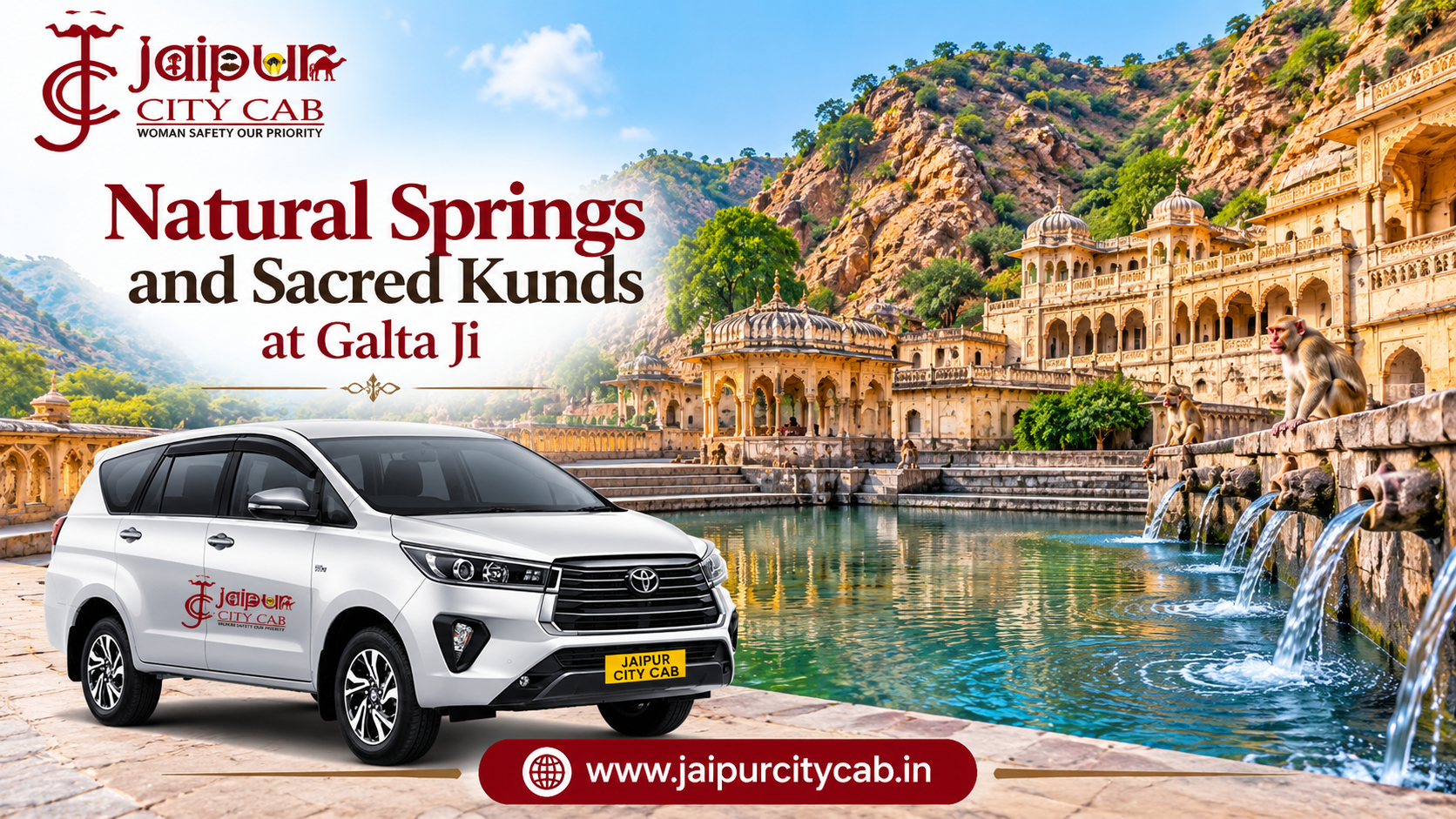
Main Attractions to Explore at Galta Ji Temple Jaipur
1. Galta Kund
Galta Kund is one of the most important places within the complex. Its association with sacred water makes it central to the religious identity of the destination. Visitors can appreciate the surrounding stone architecture and observe the atmosphere of the pilgrimage area while respecting any access restrictions.
2. Historic Temple Buildings
The temples and associated buildings display traditional architectural features that reflect Rajasthan's historic craftsmanship. Their decorative facades, courtyards and stone details make them important subjects for visitors interested in cultural heritage.
3. Natural Hillside Landscape
The hills surrounding Galta Ji contribute significantly to its beauty. Their rocky surfaces and changing colours create a dramatic backdrop for the temple buildings. Travellers who enjoy natural scenery may find the setting as memorable as the structures themselves.
4. Sacred Water Reservoirs
The other kunds and water features form part of the larger pilgrimage environment. They illustrate the relationship between water, religious tradition and architecture in the development of the complex.
5. Traditional Pilgrimage Atmosphere
Galta Ji is a living religious destination. Devotional activities, visiting pilgrims and the historic setting together create an atmosphere that differs from a conventional museum or monument.
6. Hillside Views and Photography Points
Selected public areas around the complex provide views of the temples and surrounding terrain. Visitors should remain on permitted pathways and avoid climbing unsafe rocks or entering restricted structures to obtain photographs.
Galta Ji Temple Distance from Jaipur – How Far Is the Monkey Temple?
Galta Ji is located on the eastern side of Jaipur, making it a convenient addition to a local sightseeing itinerary. The actual driving distance depends on the pickup location, the selected approach road and traffic conditions.
Travellers staying near Jaipur's railway station, airport or major hotel districts should allow additional time for city traffic. The final approach also depends on the particular entrance or access point selected for the temple complex.
| Starting Location | Approximate Road Distance | Estimated Travel Time |
|---|---|---|
| Hawa Mahal Area | 10–13 km | 25–40 minutes |
| Jaipur City Palace Area | 10–14 km | 25–45 minutes |
| Jaipur Railway Station | 14–18 km | 35–55 minutes |
| Jaipur International Airport | 17–22 km | 40–65 minutes |
| Amer Fort Area | 16–22 km | 40–65 minutes |
| Jaipur City Centre | 10–16 km | 25–50 minutes |
Distance Note: These are broad planning estimates, not live navigation measurements. Road selection, traffic and the exact temple entrance can change the actual distance. Confirm your route with the driver before departure.
A private cab is convenient because travellers do not need to coordinate multiple transfers. The vehicle can collect passengers from their accommodation and continue towards the temple using an appropriate public road.
Best Route to Galta Ji Monkey Temple by Cab from Jaipur
The most suitable road route to Galta Ji depends on the starting point within Jaipur. Travellers coming from the old city may approach the eastern side of Jaipur through the relevant city roads towards the Galta area, while passengers arriving from the airport or railway station may use a different alignment to avoid unnecessary congestion.
One commonly considered approach from central Jaipur is towards the Surajpol and Galta Gate side of the city, continuing according to the available road access. The precise route should be checked because different entrances and walking approaches may lead to different parts of the temple area.
Visitors should distinguish between a road approach suitable for a taxi and a hillside walking route. Some online travel descriptions refer to walking approaches or viewpoints that are not equivalent to direct vehicle access to the main complex.
A driver familiar with Jaipur can help identify an appropriate drop-off point based on current road conditions and the passenger's mobility requirements.
For travellers arriving by air, Jaipur airport taxi service can be included in the overall travel arrangement, followed by hotel transfer or sightseeing according to the itinerary.
Galta Ji Temple Timings, Entry Fee and Visitor Information
Galta Ji is generally visited during daylight hours. Some travel guides describe broad opening periods beginning around sunrise and extending towards sunset, but visitors should not assume that every shrine and area follows exactly the same schedule.
The operating arrangements of an active temple can change during religious festivals, special ceremonies, maintenance activities or local administrative decisions. For this reason, it is better to confirm current access information before beginning the journey.
| Visitor Information | Planning Guidance |
|---|---|
| Recommended Visiting Hours | Morning or late afternoon during daylight |
| Time Required | Approximately 1.5–2.5 hours |
| Entry Fee | Confirm current charges, if applicable, locally |
| Photography | Follow temple-specific photography restrictions |
| Footwear | Remove footwear where religious rules require it |
| Accessibility | Uneven surfaces and steps may be present |
| Festival Visits | Expect possible crowding and schedule changes |
Travellers should also clarify whether camera charges, guide fees or other visitor-related charges apply. A taxi booking normally covers transportation only unless additional services are specifically included in the quotation.
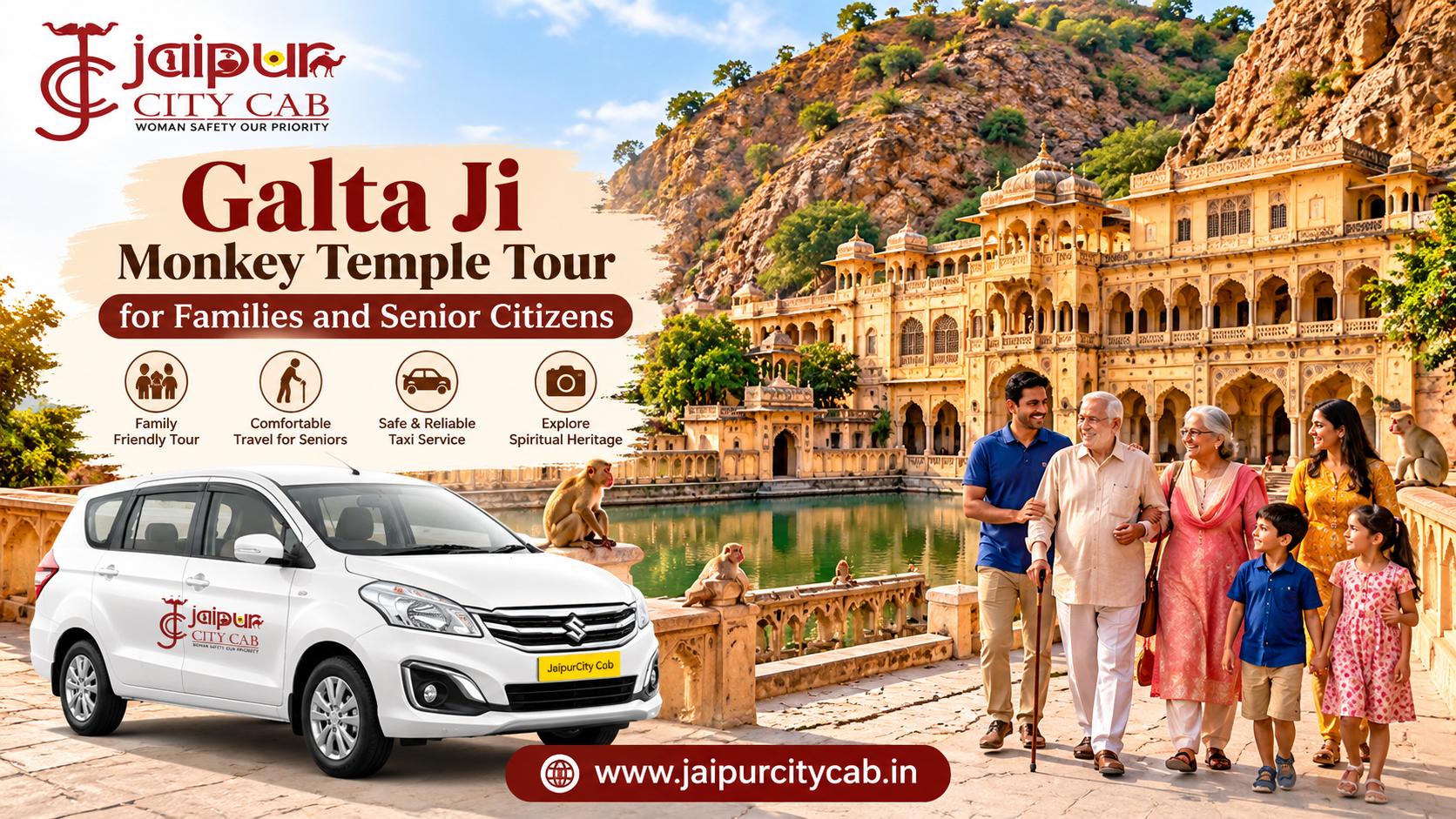
Best Time to Visit Galta Ji Monkey Temple Jaipur
The best time to visit Galta Ji depends on the season, temperature, religious calendar and the kind of experience travellers want. Because the complex is located among rocky hills and includes outdoor walking areas, comfortable weather can make a considerable difference.
October to March – Comfortable Sightseeing Season
October to March is generally the most pleasant period for exploring Jaipur's outdoor attractions. The comparatively cooler weather makes walking around the temple complex more comfortable, particularly for families and travellers interested in photography.
Morning visits during winter can be especially enjoyable because the sunlight is softer and the atmosphere is often calmer. However, travellers should carry suitable clothing for cooler mornings, particularly in December and January.
April to June – Summer Travel Considerations
Jaipur can experience intense heat during late spring and summer. Outdoor walking in the afternoon may become uncomfortable, especially for senior citizens and young children.
Visitors travelling during these months should prefer early morning hours, carry sufficient drinking water and reduce prolonged exposure to direct sunlight.
July to September – Monsoon Landscape
The monsoon period can bring a greener appearance to the surrounding hills. The landscape may look particularly attractive after rainfall, offering a different visual experience from the dry summer months.
However, wet stone surfaces, slippery pathways and changing road conditions require additional caution. Visitors should avoid unsafe hillside routes during rain.
Festival and Religious Occasions
Religious occasions can provide an opportunity to observe the living devotional traditions of Galta Ji. They may also attract larger crowds and result in different access arrangements.
Travellers seeking a peaceful sightseeing experience may prefer ordinary weekdays, while devotees interested in specific religious observances should confirm the relevant festival schedule in advance.
Jaipur to Galta Ji Temple Taxi Fare – How Is the Cost Calculated?
The cost of a Jaipur to Galta Ji taxi service depends on several factors, including pickup location, vehicle category, total kilometres, waiting time and whether the booking is limited to the temple or includes other sightseeing attractions.
A traveller booking a direct hotel-to-temple transfer may receive a different quotation from a family arranging a full-day Jaipur sightseeing package. The fare may also vary depending on the number of passengers, vehicle availability and seasonal demand.
For visitors who want to combine Galta Ji with Hawa Mahal, City Palace, Amber Fort or other destinations, a sightseeing package may be more practical than arranging several separate transfers.
| Taxi Booking Type | Fare Considerations |
|---|---|
| One-Way Temple Transfer | Pickup point, route distance and vehicle category |
| Round-Trip Galta Ji Taxi | Return distance and agreed waiting period |
| Half-Day Temple Tour | Duration, selected temples and vehicle usage |
| Full-Day Jaipur Sightseeing | Package duration, kilometre allowance and attractions |
| Airport Pickup with Temple Visit | Airport transfer, sightseeing detour and final drop |
| Group Tour | Passenger count and appropriate vehicle capacity |
For a reference point, previously offered Jaipur City Cab full-day Jaipur sightseeing rates have included approximately ₹2,000 for a sedan, ₹2,500 for an SUV and ₹3,000 for an Innova. These figures should be treated as indicative historical package rates, not verified current prices or a guaranteed Galta Ji quotation.
Before booking, confirm the current fare, applicable duration and kilometre limit, parking charges, waiting time, driver allowance and taxes. Any additional sightseeing or extended use should be discussed in advance.
Travellers can request a customised quotation through Jaipur City Cab based on their preferred pickup point, vehicle and itinerary.
Which Taxi Is Best for a Galta Ji Monkey Temple Tour?
Choosing a suitable vehicle helps make the journey comfortable and convenient. Although Galta Ji is relatively close to Jaipur city, travellers may want to combine it with several other attractions, making seating comfort and luggage capacity important considerations.
| Vehicle Type | Suitable For | Travel Benefits |
|---|---|---|
| Sedan | Couples and small families | Economical local sightseeing |
| Ertiga or Similar MPV | Small family groups | Flexible seating arrangements |
| Innova | Families and comfort-focused travellers | Spacious seating for longer sightseeing |
| Innova Crysta | Premium family travel | Additional comfort for multi-stop tours |
| Tempo Traveller | Larger groups | Group transport with suitable capacity |
A sedan is often sufficient for two or three travellers carrying limited luggage. Families may prefer an Innova or similar vehicle when travelling with children or senior citizens.
Larger groups can also explore Jaipur bus rental and group transport options for sightseeing journeys involving several destinations.
The vehicle should be selected according to actual passenger capacity rather than assuming that all advertised seats provide equal comfort when luggage is included.
Half-Day Galta Ji Monkey Temple Tour Itinerary by Cab
A half-day itinerary is suitable for travellers who have limited time in Jaipur but want to experience the temple's religious and architectural atmosphere. It is particularly useful for visitors who have already explored the city's major forts and palaces.
Morning – Pickup from Jaipur Hotel
Begin the journey with pickup from your hotel or another agreed location. Travelling in the morning generally provides more comfortable conditions, especially during warmer months.
Arrival at Galta Ji Temple
Reach the temple using the suitable road approach and allow time to explore the accessible public areas. Observe the historic buildings, sacred water tanks and surrounding hills while respecting religious activities.
Temple Photography and Heritage Exploration
Spend time appreciating the architecture and natural setting. Photography should be limited to permitted areas, and visitors should maintain a safe distance from monkeys.
Return to Jaipur
After completing the visit, return to your hotel or continue to another attraction if it has been included in the booking.
Suggested Duration: Approximately four to five hours including local transfers, depending on the pickup location, traffic and time spent at the complex.
One-Day Jaipur Temple Sightseeing Tour with Galta Ji
A one-day temple itinerary is ideal for visitors who want to discover Jaipur's spiritual side while travelling comfortably by private cab. The city is home to several important religious destinations, each with its own architectural and devotional traditions.
| Suggested Order | Destination | Experience |
|---|---|---|
| 1 | Galta Ji Temple | Sacred kunds, architecture and hillside surroundings |
| 2 | Surya Mandir Area | Historic religious setting and views, subject to accessible routes |
| 3 | Govind Dev Ji Temple | Important Krishna devotional tradition |
| 4 | Moti Dungri Ganesh Temple | Popular Jaipur pilgrimage destination |
| 5 | Birla Mandir | Marble temple architecture and peaceful surroundings |
The actual order should be adjusted according to temple opening schedules, darshan periods, traffic and passenger preferences. Some temples have intervals when visitor access is limited, so an efficient itinerary should be planned around confirmed timings.
Visitors who want to include more attractions can explore Jaipur sightseeing taxi packages and customise the journey according to their interests.
Two-Day Jaipur Heritage and Galta Ji Temple Tour by Taxi
A two-day itinerary provides a balanced experience for travellers who want to combine Jaipur's famous royal monuments with its religious heritage. Instead of visiting too many places in one day, the journey can be divided into two complementary themes.
Day 1 – Discover Jaipur's Royal Heritage
Begin with Amber Fort, one of Jaipur's most famous historic attractions. Explore its courtyards, architectural details and surrounding landscape according to the available time.
Continue towards Jal Mahal for a lakeside photography stop, then travel to the old city to see Hawa Mahal, City Palace and Jantar Mantar. These attractions reveal different aspects of Jaipur's royal planning, architecture and cultural development.
Spend the evening exploring selected local markets or enjoying traditional Rajasthani cuisine.
Day 2 – Explore Jaipur's Spiritual Heritage
Start the second day with a morning visit to Galta Ji Temple. Allow enough time to appreciate the sacred kunds, historic buildings and surrounding natural scenery.
After the temple visit, continue towards other religious attractions according to their current schedules. Govind Dev Ji Temple, Moti Dungri Ganesh Temple and Birla Mandir are suitable options for a spiritual sightseeing day.
The evening can be kept flexible for shopping, a relaxed dinner or transfer to the railway station or airport.
This two-day plan is particularly suitable for families, first-time visitors and travellers who prefer to understand Jaipur's history and religious traditions without an excessively rushed schedule.
Best Places to Visit Near Galta Ji Temple Jaipur
Surya Mandir
Surya Mandir is associated with the hillside religious landscape near the Galta area. Its setting can appeal to travellers interested in historic temples and panoramic views. Visitors should check the appropriate walking approach and avoid assuming that a taxi can reach every hillside viewpoint directly.
Hawa Mahal
Hawa Mahal is one of Jaipur's most recognisable landmarks. Its distinctive facade and historic connection with the royal city make it a worthwhile addition to a temple sightseeing itinerary.
City Palace
City Palace introduces travellers to Jaipur's royal heritage through its courtyards, buildings and museum areas. It offers an interesting contrast to the religious atmosphere of Galta Ji.
Jantar Mantar
Jantar Mantar is a historic astronomical observatory recognised for its remarkable instruments and scientific significance. Visitors interested in history and traditional knowledge may enjoy combining it with other old-city attractions.
Govind Dev Ji Temple
Govind Dev Ji Temple is an important religious destination associated with devotion to Lord Krishna. Its location within Jaipur makes it a natural addition to a customised temple tour.
Birla Mandir
Birla Mandir is admired for its white marble architecture and peaceful setting. It is a popular destination for visitors who want to include another important religious landmark in their Jaipur itinerary.
The best combination depends on the available time. Travellers should avoid attempting to cover every attraction in a single short visit, particularly when travelling with children or elderly family members.
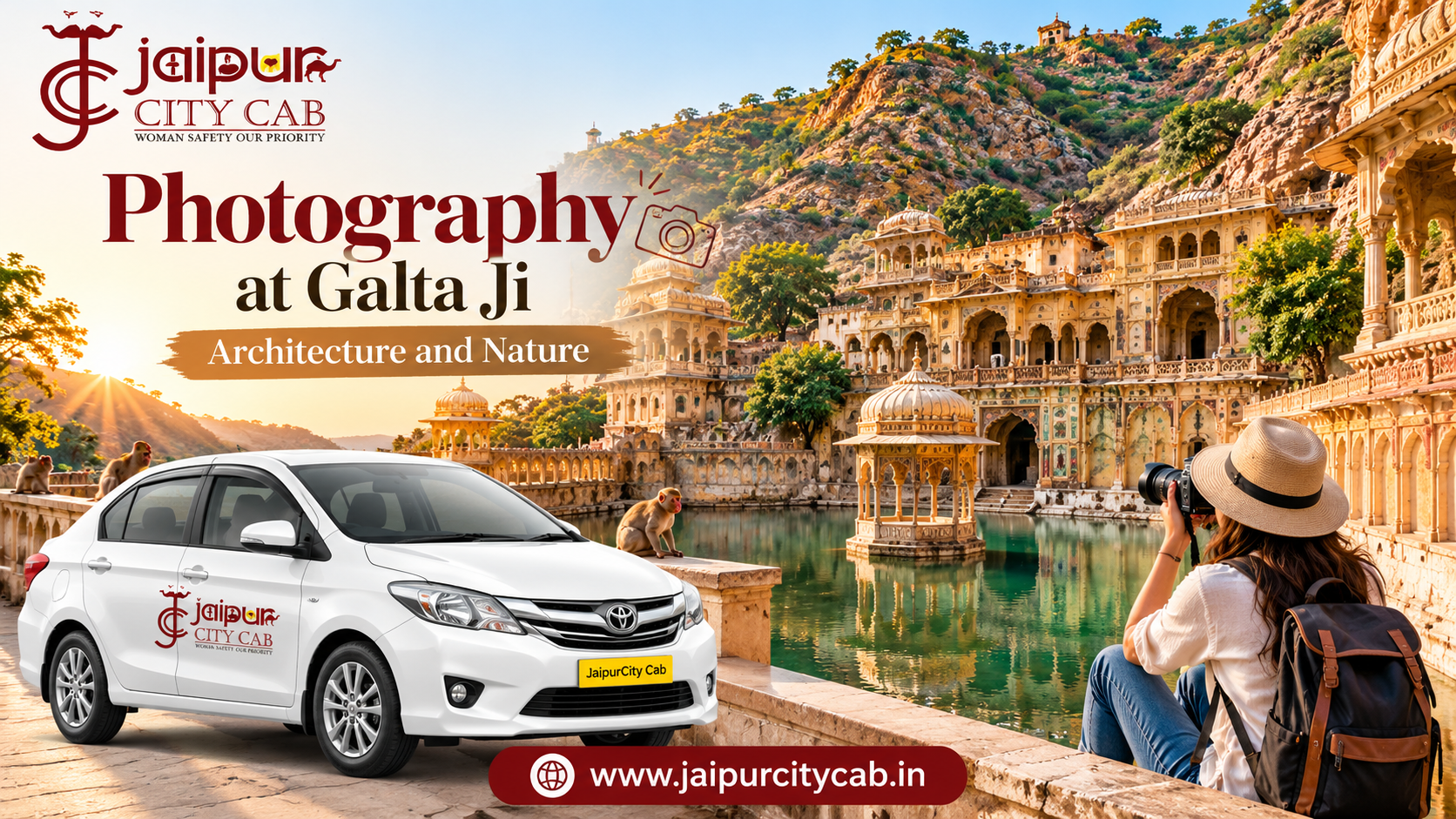
Photography at Galta Ji – Capturing Architecture, Nature and Spiritual Heritage
Galta Ji offers a distinctive photography experience because its visual character combines religious buildings, natural rock formations, water reservoirs and changing sunlight. Unlike Jaipur's busy urban monuments, the temple complex has a landscape-oriented setting that can produce memorable compositions.
Morning light may be especially suitable for photographing architectural surfaces and the surrounding hills. Softer sunlight can reveal the texture of stonework while reducing harsh shadows in open areas.
The sacred kunds also create interesting opportunities for architectural photography. Reflections, stone steps and the relationship between water and buildings contribute to the site's distinctive appearance.
Wildlife photography requires additional care. Monkeys should be photographed from a respectful distance without food, flash harassment or attempts to attract them towards the camera.
Visitors should not block religious activities, photograph worshippers without permission or enter restricted areas for a better camera angle.
Professional shoots, commercial filming and drone photography may require specific permissions. Travellers planning such activities should obtain the necessary approvals rather than assuming ordinary visitor access is sufficient.
Galta Ji Monkey Temple Tour for Families, Children and Senior Citizens
Galta Ji can be an enjoyable family destination because it combines culture, nature and religious heritage within a relatively short distance from Jaipur. Children may find the landscape and wildlife interesting, while adults may appreciate the historical and spiritual importance of the site.
However, families should plan the visit carefully. Some areas have steps, uneven pathways and surfaces that may become slippery, particularly during the monsoon season.
Senior citizens and visitors with mobility limitations should confirm the most convenient entrance and drop-off point before travelling. Not every area of the complex may be accessible without walking or climbing steps.
A spacious cab can make the overall journey more comfortable, especially when the temple is combined with additional Jaipur sightseeing destinations.
Families travelling with young children should remain attentive around monkeys and water reservoirs. Children should not be encouraged to feed animals or approach them for photographs.
Carrying drinking water, comfortable footwear and necessary medicines can improve the experience. During summer, morning visits are preferable to prolonged afternoon exposure.
For travellers who want a relaxed outing, it may be better to explore a smaller number of attractions thoroughly rather than completing a demanding schedule.
Important Travel Tips Before Visiting Galta Ji Monkey Temple
A successful visit to Galta Ji depends on understanding the character of the destination. It is an active religious complex located within a natural hillside environment, so travellers should prepare differently than they would for a modern indoor attraction.
- Prefer morning visits during the warmer months.
- Confirm current temple access and opening information.
- Wear comfortable footwear suitable for uneven surfaces.
- Dress respectfully because Galta Ji is a religious destination.
- Keep mobile phones, sunglasses and small belongings secure.
- Do not feed, touch or tease monkeys.
- Maintain a safe distance from wildlife.
- Carry drinking water and sun protection.
- Avoid slippery hillside pathways during rainfall.
- Follow local instructions regarding bathing and access to kunds.
- Ask permission before photographing worshippers.
- Respect photography restrictions inside temple areas.
- Confirm the taxi pickup and return location with your driver.
- Allow extra time during religious festivals and busy weekends.
- Clarify taxi waiting charges and sightseeing inclusions before booking.
Visitors should also remember that the natural environment is part of Galta Ji's attraction. Avoid littering, damaging historic surfaces or disturbing animals. Responsible tourism helps preserve the temple's character for future visitors and worshippers.
Why Plan Your Galta Ji Monkey Temple Tour with Jaipur City Cab?
Planning a sightseeing journey around Jaipur involves more than selecting a destination. Travellers must consider hotel location, traffic conditions, temple schedules, passenger comfort and the time required to move between attractions.
A customised cab arrangement can make these details easier to manage. Instead of organising several independent transfers, visitors can discuss a complete itinerary covering Galta Ji and other destinations they want to explore.
Jaipur City Cab provides a point of contact for travellers interested in Jaipur local sightseeing, airport transfers and customised taxi journeys. Visitors can discuss their preferred vehicle category, pickup location, travel dates and sightseeing requirements before confirming a booking.
Couples may prefer an economical sedan, while families may choose an Ertiga or Innova according to their seating and luggage needs. Larger groups can request an appropriate group vehicle, subject to availability.
A Galta Ji itinerary can also be combined with Hawa Mahal, City Palace, Govind Dev Ji Temple, Birla Mandir or other attractions when the available time and operating schedules permit.
For visitors arriving from another city, airport pickup and local sightseeing can be planned together to reduce unnecessary travel arrangements.
Explore the Jaipur City Cab official website to discuss a personalised temple sightseeing tour and request a quotation based on your travel requirements.
Book Your Galta Ji Monkey Temple Tour by Taxi
Jaipur City Cab
Galta Ji Temple | Jaipur Local Sightseeing | Temple Tours | Airport Transfers
Call / WhatsApp: +91 6376602323 | +91 9636291797
Website: www.jaipurcitycab.in
Email: jaipurcitycab.in@gmail.com
Plan your Galta Ji Temple visit with a customised taxi itinerary based on your pickup location, travel dates and preferred sightseeing destinations.
Frequently Asked Questions About Galta Ji Monkey Temple Jaipur
Q1. Where is Galta Ji Monkey Temple located?
Answer: Galta Ji is situated among the hills on the eastern side of Jaipur, Rajasthan. It is a historic Hindu pilgrimage complex known for its sacred kunds, religious architecture and monkeys.
Q2. Why is Galta Ji called the Monkey Temple?
Answer: Galta Ji is popularly called the Monkey Temple because monkeys are commonly seen around parts of the complex. Its religious importance, however, comes from its temples, sacred water and pilgrimage traditions.
Q3. What is the history of Galta Ji Temple?
Answer: Galta Ji is traditionally associated with Sage Galav and has a long history as a Hindu pilgrimage destination. The complex also has connections with the Ramanandi religious tradition.
Q4. How far is Galta Ji Temple from Jaipur city?
Answer: Galta Ji is approximately 10–16 kilometres from many central Jaipur locations by road, depending on the starting point and selected entrance.
Q5. What is the best time to visit Galta Ji?
Answer: October to March generally offers the most comfortable weather for sightseeing. Morning visits are especially advisable during warmer months.
Q6. What are the Galta Ji Temple opening hours?
Answer: The complex is generally visited during daylight hours, but individual shrine schedules and access arrangements may differ. Confirm current timings before travelling.
Q7. Is there an entry fee for Galta Ji Temple?
Answer: Entry arrangements and any applicable charges should be confirmed locally. Photography or other visitor services may have separate conditions.
Q8. How much time is needed to explore Galta Ji?
Answer: Approximately 1.5–2.5 hours may be suitable for exploring the main accessible areas, depending on walking ability, crowd levels and visitor interests.
Q9. Can I book a taxi from Jaipur to Galta Ji?
Answer: Yes. Travellers can arrange a private taxi from Jaipur to Galta Ji and request a round trip or a customised sightseeing itinerary.
Q10. How is the Galta Ji taxi fare calculated?
Answer: The fare depends on vehicle type, pickup location, total distance, waiting time and whether other sightseeing attractions are included.
Q11. Is Galta Ji suitable for families and senior citizens?
Answer: Many families visit Galta Ji, but some areas involve steps and uneven surfaces. Travellers with mobility limitations should confirm suitable access arrangements before departure.
Q12. Is it safe to interact with monkeys at Galta Ji?
Answer: Monkeys are wild animals and should not be touched, fed or approached closely. Visitors should keep food and belongings secure and follow local safety instructions.
Q13. Can Galta Ji be included in a Jaipur sightseeing tour?
Answer: Yes. Galta Ji can be combined with Hawa Mahal, City Palace, Govind Dev Ji Temple, Birla Mandir and other Jaipur attractions, depending on available time.
Q14. Can I visit Galta Ji from Jaipur Airport?
Answer: Yes. A taxi can be arranged from Jaipur Airport to Galta Ji, with optional hotel transfer or additional sightseeing according to the booking.
Conclusion – Discover the Spiritual Beauty of Galta Ji Monkey Temple with Jaipur City Cab
The Galta Ji Monkey Temple in Jaipur, Rajasthan, offers an experience that brings together religious heritage, traditional architecture, natural scenery and local culture. Its location among the hills, association with sacred water and continuing role as a pilgrimage destination make it one of the most distinctive places to explore around the Pink City.
While Jaipur's famous forts and palaces reveal the history of its royal rulers, Galta Ji introduces visitors to another important dimension of Rajasthan's identity. The complex reflects the influence of spiritual traditions, religious communities and sacred landscapes on the region's cultural development.
The historic buildings, kunds and surrounding hills create an environment that rewards thoughtful exploration. Visitors interested in photography can appreciate the relationship between architecture and nature, while devotees can experience the site's religious atmosphere.
The monkeys that have given Galta Ji its popular tourist name add another distinctive element to the destination. However, responsible behaviour around wildlife remains essential. Travellers should maintain a safe distance, avoid feeding animals and respect the natural environment.
For a comfortable visit, choosing the right season, confirming current temple access and planning sufficient time are important. October to March is generally suitable for sightseeing, while early morning visits can be preferable during warmer periods.
A private taxi provides flexibility for visitors who want to travel directly from their hotel or combine Galta Ji with other Jaipur attractions. Families may prefer a spacious vehicle, while couples and smaller groups can select a suitable sedan according to their requirements.
Whether you are planning a Galta Ji Temple taxi tour, Jaipur Monkey Temple sightseeing trip, Jaipur temple tour by cab or a longer Rajasthan holiday, the journey can be customised to match your interests and available travel time.
Visit Jaipur City Cab to discuss your travel plans, select a suitable vehicle and request a quotation for your preferred Jaipur sightseeing itinerary.
Galta Ji reminds visitors that the beauty of Rajasthan is not limited to its royal monuments. Its spiritual traditions, historic temples and natural landscapes offer another memorable way to experience the cultural richness of Jaipur.


